What is ESG Investing? How it Works and Does it Work in India?
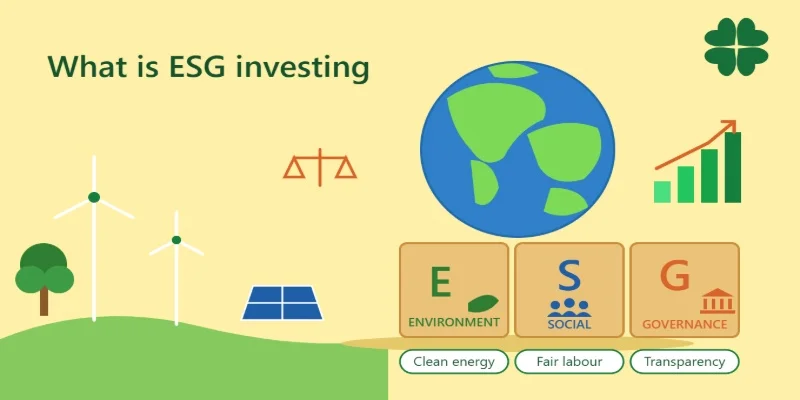
ESG investing is an investment approach that considers a company’s environmental, social and governance factors alongside traditional financial analysis. In India, investors can get ESG exposure through mutual funds, exchange-traded funds (ETFs), ESG indices and individual companies. ESG investing does not guarantee higher returns or lower risk, so investors should consider ESG factors together with valuation, financial performance, risk and diversification.
Key Takeaways
- ESG stands for Environmental, Social and Governance.
- ESG investing considers sustainability and governance factors alongside financial analysis.
- ESG does not automatically mean higher returns or lower investment risk.
- ESG strategies can differ significantly in how companies are selected and weighted.
- Indian ESG mutual funds operate within a SEBI regulatory framework that includes specific investment and disclosure requirements.
- ESG ratings can differ between providers because methodologies, data and weightings can vary.
- Investors should review portfolio holdings, ESG methodology, benchmark performance, costs, risk, valuation and diversification before investing.
What is ESG Investing?
ESG stands for Environmental, Social and Governance. ESG investing incorporates these three areas into the investment research process alongside conventional financial factors such as revenue, profitability, valuation, cash flow and balance-sheet strength.
The objective is not simply to select companies with a high ESG score. Investors and fund managers may use ESG information to identify sustainability-related opportunities, understand non-financial risks, apply exclusions, compare companies within an industry or pursue a defined sustainable-investment objective.
1. Environmental
Environmental factors relate to how a company affects and manages the natural environment. Common considerations include:
- Carbon emissions and greenhouse-gas management
- Energy efficiency and energy use
- Renewable-energy adoption
- Waste management
- Water use and conservation
- Pollution control
- Environmental incidents and regulatory compliance
2. Social
Social factors relate to how a company manages its relationships with employees, customers, suppliers and communities. They can include:
- Employee welfare and workplace safety
- Diversity and inclusion
- Customer safety and product responsibility
- Human rights
- Labour practices
- Data privacy and customer protection
- Community development and social impact
3. Governance
Governance examines how a company is managed and how effectively it protects shareholder interests. Common considerations include:
- Board structure and independence
- Corporate transparency and disclosures
- Ethical leadership
- Shareholder rights
- Regulatory compliance
- Related-party transactions
- Executive compensation
- Audit and internal-control practices
How Does ESG Investing Work in India?
- Define the investment objective and time horizon.
- Identify the ESG strategy being used, such as integration, exclusionary screening, best-in-class selection or impact investing.
- Review the companies or securities included in the investment.
- Examine ESG disclosures, scores and the methodology used to assess them.
- Evaluate financial factors such as profitability, valuation, growth, cash flow and balance-sheet strength.
- Compare historical performance with an appropriate benchmark over relevant periods.
- Review risk, concentration, costs and tax implications.
- Consider how the investment fits into a diversified portfolio.
Why is ESG Investing becoming more Relevant in India?
Interest in ESG investing in India has been supported by greater attention to sustainability, corporate governance, responsible business practices and sustainability-related disclosures. Regulatory developments have also increased the amount of ESG-related information available to investors.
The growing popularity of ESG investing in India can be linked to the following factors:
- Growing focus on environmental sustainability: Climate change and environmental conservation have become the top objectives worldwide. India has estimated that achieving its climate-related goals would require substantial investment, including around US$2.5 trillion (at 2014–15 prices) between 2015 and 2030. The country is also working towards the Sustainable Development Goals (SDGs) and encouraging all companies to adopt more sustainable business practices.
- Rising interest from global investors: International investors are taking an increasing interest in India’s ESG potential. As per Global Sustainable Investment Alliance (GSIA), 41 global ESG funds have invested an average of 25% of their portfolio in Indian equities.
This increasing allocation is a mark of confidence in the long term sustainable economic outlook for India. - Increasing domestic awareness: Indian investors are becoming increasingly aware of responsible investing. Today, a growing number of investors are making investing decisions with a view toward environmental protection, social responsibility and ethical governance as well as financial gain.
This trend is gradually strengthening the ESG investment ecosystem in India. - Availability of ESG benchmarks: Tracking ESG performance has become easier through dedicated sustainability indices, including NIFTY 100 ESG Index and S&P BSE 100 ESG Index
These indexes help investors evaluate firms based on the ESG related performance alongside financial measures.
Types of ESG Investment Strategies
Investors can choose from different types of ESG investment strategies depending on their objectives and investment philosophy. See the below table for more details:
| Strategy | How it works |
| ESG Integration | Incorporates material ESG factors into investment analysis alongside traditional financial factors. |
| Exclusionary | Excludes companies or sectors that do not meet predefined ESG criteria. |
| Best-in-Class / Positive Screening | Selects companies with relatively stronger ESG characteristics within their sectors or peer groups. |
| Impact Investing | Targets measurable environmental or social outcomes alongside a financial return objective. |
| Sustainable / Thematic | Focuses on defined sustainability themes such as clean energy, water, waste management or sustainable infrastructure. |
Ways to Invest in ESG in India
There are 3 ways to Invest in ESG in India ESG Mutual Funds, ESG ETFs & Index Funds and ESG Stocks. See below for more details:
1. ESG Mutual Funds
ESG mutual funds invest according to a defined ESG strategy. Investors should read the scheme documents to understand the investment objective, portfolio construction, ESG methodology, benchmark, risk factors and costs.
2. ESG ETFs and Index Funds
ETFs and index funds can provide exposure to an ESG index. Their performance is linked to the underlying index, subject to expenses and tracking differences.
3. ESG Stocks
Investors can independently assess listed companies using ESG disclosures and other public information before deciding whether a company fits their investment objectives. Direct stock investing requires the investor to conduct company-level research and manage diversification.
ESG Indices in India
NSE currently lists ESG-related indices including Nifty100 ESG, Nifty100 Enhanced ESG and Nifty100 ESG Sector Leaders Index. These indices can be used as benchmarks and may also underlie index funds or ETFs, depending on the product available.
| Index | Purpose / approach |
| Nifty100 ESG | ESG-focused index based on companies from the Nifty 100 universe. |
| Nifty100 Enhanced ESG | Uses ESG risk information to adjust constituent weights and excludes companies in the severe ESG-risk category under its methodology. |
| Nifty100 ESG Sector Leaders | Provides an ESG-oriented sector-leader approach within its defined index methodology. |
Does ESG Investing Work in India?
ESG investing can be useful for investors who want to incorporate environmental, social and governance considerations into their investment process, but ESG does not guarantee higher returns or lower risk. Whether an ESG investment performs well depends on its strategy, portfolio composition, sector exposure, valuation, costs, market conditions and the ESG methodology used.
Therefore, the question should not be reduced to whether ESG is automatically better than conventional investing. A more useful approach is to compare an ESG investment with an appropriate benchmark and assess both financial and ESG characteristics.
| Factor | What investors should consider |
| Returns | Compare the investment with an appropriate benchmark over multiple periods. |
| Risk | Review volatility, downside performance and concentration. |
| Valuation | Consider relevant valuation measures rather than assuming a high ESG score justifies any price. |
| Portfolio | Review sectors, individual holdings and concentration. |
| ESG methodology | Understand how ESG factors are measured and used in security selection. |
| Costs | Check expense ratio and other applicable charges. |
| Time horizon | Consider whether the investment is appropriate for the intended holding period. |
ESG Investing vs Traditional Investing
ESG investing considers environmental, social and governance factors alongside financial considerations, while traditional investing generally focuses more heavily on financial and market-related factors.
The key differences are outlined below in the table:
| Factor | ESG Investing | Traditional Investing |
| Financial analysis | Yes | Yes |
| Environmental factors | Explicitly considered under the ESG approach | May not be a defined part of the strategy |
| Social factors | Explicitly considered under the ESG approach | May not be a defined part of the strategy |
| Governance | Explicitly considered | Usually considered to some extent, depending on strategy |
| Sector exclusions | May apply | Not necessarily |
| Primary framework | Financial factors plus defined ESG considerations | Primarily the stated financial/investment strategy |
ESG Stocks vs ESG Mutual Funds
See the below table for key differences between ESG Stocks vs ESG Mutual Funds:
| Feature | ESG Stocks | ESG Mutual Funds |
| Security selection | Investor selects individual companies | Fund manager follows the scheme strategy |
| Diversification | Depends on the investor’s portfolio | Provided through the fund portfolio, subject to its strategy |
| Research requirement | Higher at the individual-company level | Investor still needs to evaluate the scheme and portfolio |
| Professional management | No | Yes |
| Costs | Applicable trading and holding costs | Expense ratio and other applicable fund costs |
| ESG methodology | Investor-defined or independently assessed | Defined by the scheme and disclosed in its documents |
ESG Regulations in India
India’s ESG reporting framework has developed significantly, particularly through SEBI’s Business Responsibility and Sustainability Reporting (BRSR) framework and the BRSR Core requirements.
BRSR
SEBI introduced an updated BRSR framework for the top 1,000 listed entities by market capitalisation from FY 2023–24. BRSR is intended to provide structured sustainability-related information as part of corporate reporting.
BRSR Core
BRSR Core contains a defined set of key ESG indicators and a phased requirement for reasonable assurance/assessment. SEBI’s July 2023 framework set the glide path at the top 150 listed entities for FY 2023–24, top 250 for FY 2024–25, top 500 for FY 2025–26 and top 1,000 for FY 2026–27.
SEBI Requirements for ESG Mutual Funds
SEBI’s Mutual Fund Master Circular dated 20 March 2026 states that an ESG scheme must invest at least 65% of its AUM in companies reporting comprehensive BRSR and providing assurance on BRSR Core disclosures. The framework also contains disclosure requirements relating to ESG strategy, ESG scores, ESG rating providers, voting rationale and fund-manager commentary.
This makes it important for investors to read the scheme’s stated ESG strategy and disclosures rather than relying only on the word ‘ESG’ in a fund name.
How to Evaluate an ESG Investment?
- Check the investment objective and ESG strategy.
- Review the portfolio holdings and sector allocation.
- Understand the ESG rating methodology and data sources.
- Review BRSR/BRSR Core-related information where relevant.
- Compare historical returns with an appropriate benchmark.
- Check volatility and portfolio concentration.
- Review the expense ratio and other applicable costs.
- Assess valuation and underlying financial performance.
- Check the fund manager or investment team’s approach.
- Consider the investment within a diversified portfolio.
How Do ESG Ratings Work?
ESG ratings attempt to assess a company’s exposure to and management of environmental, social and governance risks or opportunities. However, ESG ratings are not universal. Different rating providers can use different data sources, definitions, weightings and methodologies.
As a result, two providers may assign different ESG scores to the same company. Investors should therefore understand the methodology behind a rating and avoid treating an ESG score as a standalone buy or sell signal.
What is Greenwashing in ESG Investing?
Greenwashing refers broadly to presenting a company, product or investment as more environmentally or socially responsible than the available evidence supports. In investing, this can make it difficult for investors to distinguish between genuine ESG integration and sustainability-focused marketing.
Investors can reduce this risk by reviewing the fund’s stated ESG strategy, portfolio holdings, methodology, disclosures, voting practices and other supporting information instead of relying only on promotional descriptions.
Taxation of ESG Investments in India
Tax treatment depends on the structure and type of ESG investment. Equity-oriented ESG mutual funds are generally subject to the applicable tax rules for equity-oriented mutual funds, while non-equity-oriented products may be taxed differently. Individual ESG shares can also have their own capital-gains and dividend-tax implications.
A) Short-Term Capital Gains
For equity-oriented mutual fund units, short-term capital gains on transfers covered by Section 111A are generally taxed at 20% for transfers on or after 23 July 2024, subject to applicable conditions.
B) Long-Term Capital Gains
For equity-oriented mutual fund units covered by Section 112A, long-term capital gains exceeding ₹1.25 lakh in the relevant financial year are generally taxed at 12.5% for transfers on or after 23 July 2024, subject to applicable conditions.
C) Dividends
Dividend income is generally taxable in the hands of the investor at the applicable income-tax rate, subject to the relevant provisions.
Tax laws can change and the actual tax treatment depends on the investment, transaction and taxpayer’s circumstances. Investors should verify the latest Income Tax Department guidance before making tax or investment decisions.
Read Also: What are the different types of Dividends?
How to Start ESG Investing in India?
- Define your financial goal and investment horizon.
- Decide whether you want direct stocks, mutual funds, ETFs or index exposure.
- Understand the ESG strategy before investing.
- Review the portfolio and ESG disclosures.
- Compare costs, risks and benchmark performance.
- Evaluate valuation and financial fundamentals where relevant.
- Check how the investment fits with your existing portfolio.
- Review the investment periodically rather than relying only on an ESG label.
Benefits of ESG Investing
- Provides a framework for considering environmental, social and governance factors alongside financial analysis.
- Can help investors identify sustainability-related risks and opportunities.
- Offers access to dedicated ESG mutual funds, ETFs and indices.
- Can align an investment approach with an investor’s sustainability preferences.
- Encourages greater attention to corporate disclosures and governance practices.
Risks and Limitations of ESG Investing
ESG Investing has following Risks and Limitations:
- ESG ratings can differ across providers.
- Excluding sectors or companies can affect diversification.
- ESG investments can underperform broader benchmarks over some periods.
- ESG methodologies can change over time.
- Sustainability-related disclosures may have limitations.
- Greenwashing can make product comparison more difficult.
- ESG funds remain subject to normal market, company and liquidity risks.
ESG Investment Checklist
Follow this checklist always before starting ESG Investment in India:
- Investment objective
- ESG strategy and methodology
- Portfolio holdings
- Sector allocation and concentration
- ESG ratings and rating provider
- BRSR/BRSR Core disclosures where relevant
- Historical performance and benchmark
- Volatility and risk
- Expense ratio and other applicable costs
- Valuation and financial fundamentals
- Tax implications
- Fit within the overall diversified portfolio
Open your Demat account Today!
Conclusion
ESG investing provides a framework for incorporating environmental, social and governance considerations into investment decisions alongside traditional financial analysis. In India, investors can access ESG exposure through mutual funds, ETFs, indices and individual companies, while SEBI’s regulatory framework has increased ESG-related disclosures and requirements.
However, ESG characteristics do not guarantee superior returns or lower risk. Investors should evaluate the specific ESG strategy, portfolio, benchmark, costs, valuation, financial performance, disclosures and risk before investing. ESG can be one part of an investment process rather than a substitute for financial analysis and diversification.
Frequently Asked Questions (FAQs)
What is ESG investing?
ESG investing is an approach that considers environmental, social and governance factors alongside traditional financial analysis when evaluating investments.
What are the three pillars of ESG investing?
The three pillars are Environmental, Social and Governance. They cover areas such as environmental impact, employee and customer practices, and corporate governance.
Does ESG investing always outperform the market?
No. ESG investments can outperform or underperform broader market benchmarks over different periods. Performance depends on portfolio composition, valuation, sector exposure, ESG methodology and market conditions.
What are ESG funds in India?
ESG funds are mutual fund schemes that follow a defined environmental, social and governance investment strategy. Investors should review the scheme documents, strategy, portfolio and risk factors before investing.
How are ESG mutual funds regulated in India?
SEBI has specific requirements for ESG mutual fund schemes, including investment criteria and disclosures. Under the March 2026 Mutual Fund Master Circular, an ESG scheme must invest at least 65% of its AUM in companies reporting comprehensive BRSR and providing assurance on BRSR Core disclosures, subject to the applicable framework.
Are ESG investments risky?
Yes. ESG investments are subject to market, company, valuation, concentration and other investment risks. ESG screening does not eliminate the possibility of losses.
How do ESG ratings work?
ESG ratings assess companies using environmental, social and governance-related data and methodologies. Ratings can differ between providers because they may use different data, weightings and methodologies.
What is greenwashing in ESG investing?
Greenwashing is the presentation of a company, product or investment as more sustainable or responsible than the supporting evidence indicates. Investors should review underlying disclosures and methodology rather than relying only on marketing claims.
How are ESG mutual funds taxed in India?
The tax treatment depends on the structure of the fund. Equity-oriented ESG mutual funds are generally subject to the applicable tax rules for equity-oriented mutual funds, while non-equity-oriented products can have different treatment. Investors should check the latest tax rules for their specific investment.
Disclaimer
This article is for educational and informational purposes only and should not be considered investment, tax or financial advice. ESG investments are subject to market risks, and past performance does not guarantee future returns. Tax rules, SEBI regulations, fund strategies and market data may change. Investors should review the latest official documents and consider their own financial circumstances and risk profile before making an investment decision.