

- Real Time Feeds
- Advance Charts and Tools
Commodity Trading Simplified
Turn market volatility into tactical advantage. Trade Gold, Silver, Crude and Agri commodities with pro tools.
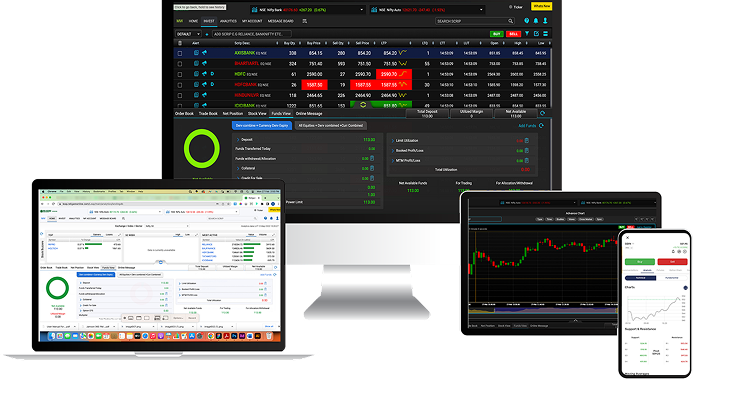
Trade Commodities Online. Seize Strategic Moves.
Your all-in-one commodity trading platform to track, analyse and trade.

Seamless Trade Excecution
Execute trades quickly with real-time P&L tracking, stop-loss and risk management features.

Market Insights & Analysis
Track price movements, demand-supply trends and research insights for confident execution

Advanced Charting Tools
Visualise market trends with interactive charts and technical indicators on our platform
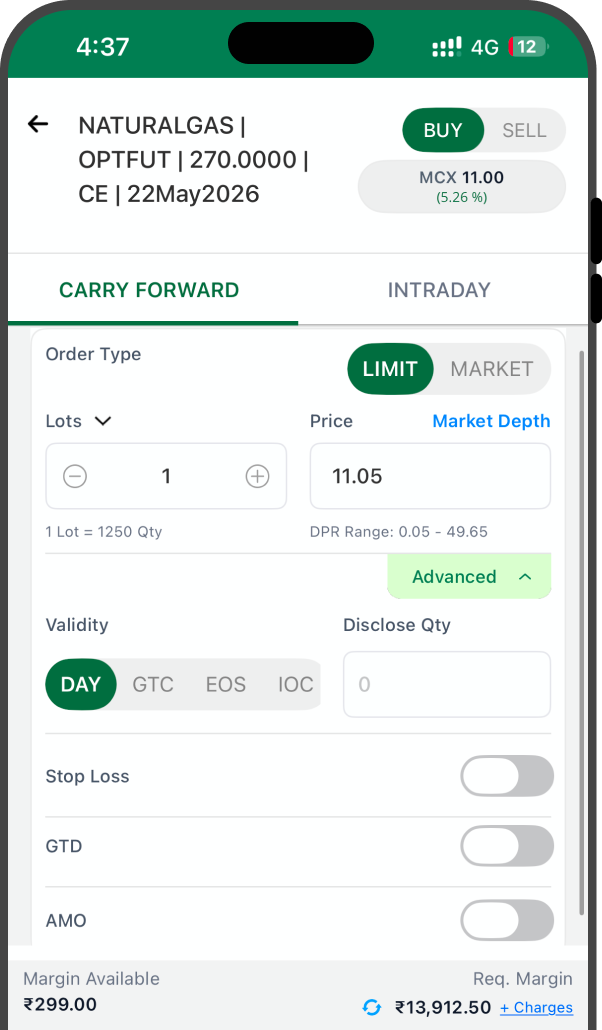

Trade from Anywhere
Manage your commodity portfolio seamlessly from mobile app and trade conveniently

Price Alerts & Notifications
Receive instant updates on commodity prices and contract expiries and stay ahead.

Dedicated Support
Get priority assistance with account setup, margin queries and trade execution, exclusive to our customers
Features of Our Trading Platform
Smart, intuitive features to enhance your trading experience.

Instant Account Opening

Fully Integrated Trading Platform

In depth Research Expertise

Advanced Screeners and Charting Tools
How to Trade Commodities with Religare?
Start your commodity trading journey in 4 simple steps. Access seamless trading platform, live market data, and advanced tools—all in one place.

Account Activation
Open your account, complete the KYC process, e-sign and unlock the Commodities segment across all exchanges instantly.

Add Funds
Transfer funds to meet initial margin requirements. Use margin calculators to assess capital efficiency and buying power.

Execute Orders
Use advanced charts and screeners to identify market direction. Place Long or Short orders with a single click across commodities.

Track and Manage
Monitor real-time MTM (Mark-to-Market) and margin status. Set stop-loss triggers to manage risk and exit positions at the right time.

Why Choose Religare Broking?
We combine three decades of trust with advanced technology for seamless execution. Our clients trade with absolute confidence, backed by professional research and market insights.

30+ Years
of Trust

All-in-One,
Web and Mobile Platform

1300+
Touch Points

Client Centric
Approach
Your Guide to Commodity Trading
All you need to know about commodity trading and trade confidently. Know about markets, strategies, and tools here.
What is Commodity Trading in Indian Stock Market?
Commodity trading is the process of buying and selling contracts linked to commodities such as gold, crude oil, wheat and cotton. Unlike equity trading, where you buy a stake in a company’s future, commodity trading allows you to capitalize on the price movements of real, physical goods through derivative contracts.
When you trade commodities on Indian exchanges, you do not need to worry about storing gold or handling physical goods. Instead, you trade standardised derivative contracts that represent these commodities. In most cases, trades are cash-settled. That is, when the contract expires, the profit or loss is settled in cash based on price movement, without any hassle of physical delivery. This offers a seamless, digital-first trading experience.
With Religare's online commodity trading platform, you can open an account, add funds, and start trading gold, silver, crude oil, and agri-commodities in just a few clicks. Commodity futures and options work much like equity derivatives, except they are linked to physical commodities. Most of the trades are settled by squaring off positions before expiry, so retail traders typically do not take or give physical delivery.
What is the Commodity Trading Time Schedule in India?
Commodity trading time in India runs longer than the equity trading. On MCX, trading happens in two sessions:
| Session | Timing |
|---|---|
| Bullion (Gold and Silver) | Morning Session: 9:00 AM – 5:00 PM Evening Session: 5:00 PM – 11:30 PM (March–October)5:00 PM – 11:55 PM (November–February) |
| Energy (Crude Oil and Natural Gas) | Morning Session: 9:00 AM – 5:00 PM Evening Session: 5:00 PM – 11:30 PM (March–October)5:00 PM – 11:55 PM (November–February) |
| Base Metals (Aluminium, Copper, Zinc, Lead and Nickel) | Morning Session: 9:00 AM – 5:00 PM Evening Session: 5:00 PM – 11:30 PM (March–October)5:00 PM – 11:55 PM (November–February) |
| Agri Commodities (Spices, Guar Seed Complex, Cotton Cake, Castor, etc.) | Morning Session: 9:00 AM – 5:00 PM Evening Session: Not Available |
NCDEX, which focuses on agri-commodities, follows a single session from 9:00 AM to 5:00 PM.
The evening close for non-agri commodities shifts twice a year in line with US Daylight Saving Time, keeping Indian trading hours aligned with global markets like COMEX and NYMEX (Functioning under the CME group). This extended commodity market trading time is especially useful for working professionals who want to trade gold, crude oil and other globally-priced commodities after regular office hours. All intraday positions are squared off 10 minutes before the session closes. The market remains shut on weekends and on exchange-notified holidays, though evening sessions for internationally-linked commodities often stay open even on Indian festival holidays, since global markets keep trading regardless.
What are the Advantages of Commodity Trading?
Commodity trading in India offers several benefits for investors and traders looking to manage risk and tap into market opportunities. Some of the key advantages are as below:
Portfolio Diversification
Commodity prices often move differently from equities and bonds. When production costs rise, company profits may come under pressure. Commodities, however, tend to perform well in such conditions, especially during inflationary phases.
Hedge Against Inflation
Inflation leads to a steady increase in the prices of goods and services. As demand rises and supply tightens, raw material costs go up, pushing commodity prices higher. Investing in commodities can help investors keep pace with rising prices.
High Leverage Opportunities
Commodity derivatives such as futures and options allow traders to take larger positions with a relatively small initial investment. Traders are required to pay only a margin, usually a small percentage of the contract value. Leverage magnifies both potential gains and potential losses, so it should be used with a clear risk management plan.
Protection during Geopolitical Uncertainty
Events such as wars, political instability or supply chain disruptions can create shortages and lead to sharp price movements in commodities. Trading commodities during such periods can help offset losses in other investments.
List of Commodity Trading Exchanges in India
- Multi-Commodity Exchange (MCX): India’s largest exchange for metals and energy.
- National Commodity and Derivatives Exchange (NCDEX): It is a hub for agricultural commodities.
- Indian Commodity Exchange (ICEX): It specialises in diamond and steel futures.
What are the Different Types of Commodity Markets?
Commodity trading usually takes place in two types of markets: spot markets and derivatives markets.
- Spot Markets: This is also called cash or physical markets, which involve the direct buying and selling of commodities for immediate delivery. Here, the actual commodity is exchanged at the current market price.
- Derivatives Markets: They allow traders to buy and sell contracts based on commodities rather than physical goods. In India, commodity derivatives mainly include futures and options. Futures are standardised contracts where buyers and sellers agree on a price for a future date. On expiry, the contract is settled either through physical delivery or cash settlement. Explore how these contracts work in more detail on our Derivatives Trading page.
What are the Various Ways to Trade in Commodities?
These are different ways of commodity trading:
1. Commodity ETFs
Commodity Exchange Traded Funds (ETFs) track the performance of a commodity index (like Gold ETFs) or a group of commodities. They allow investors to gain diversified exposure to commodities without the need for physical ownership or storage. These are ideal for long term investors.
2. Futures Contracts
Futures trading involves buying or selling standardised contracts for the delivery of a commodity at a fixed price on a future date. These contracts are based on market expectations of supply and demand and come with predefined contract sizes and expiry dates. The participants are active speculators.
3. Spot Trading
In spot trading, commodities are bought or sold at the current market price with immediate payment and delivery. For example, a trader can purchase crude oil at today’s price and take delivery right away.
4. Options Contracts
Options give traders the right, but not the obligation, to buy or sell a commodity at a pre-set price within a specified time. These contracts are often used to benefit from price movements while managing risk.
5. Commodity Shares
Investors can also gain exposure to commodities by investing in companies involved in their production or distribution, such as oil or metal producers. Thus, it becomes an indirect way to participate in commodity price movements.
Which Commodities Are Most Actively Traded in India?
The commodity you choose to trade depends on your own risk appetite, capital and market understanding. When considering commodity trading as beginners, it's advisable to start with smaller lot sizes such as Gold Mini or Silver Micro, understand contract expiry dates, and avoid overleveraging until you are comfortable with how margin and volatility work together. This is not an investment advice, one should assess their financial situation or consult a financial advisor before trading.
Let’s overview types of commodities and understand which commodities have seen the highest trading activity on Indian exchanges in the past and according to your profile, decide what to trade in commodity segment.
- Gold and Silver: Among the most liquid contracts on MCX, often used for portfolio diversification.
- Crude Oil: High trading volumes, with prices sensitive to global supply-demand shifts and geopolitical developments.
- Natural Gas: Known for sharp volatility, especially around seasonal demand shifts.
- Copper and Zinc: Industrial metals that track global economic activity and manufacturing demand.
- Agri-commodities (Spices, Guar Seed, Guar Gum, Cotton etc.): Driven by domestic supply, weather and harvest cycles, offering a different risk profile from globally-priced commodities.
Liquidity and trading volume are not indicators of profitability. Please assess your own risk tolerance, or consult a financial advisor, before choosing a commodity to trade.
Commodity Trading Strategy: Common Approaches Traders Use
A clear commodity trading strategy helps you enter and exit positions with discipline rather than react to every price move. Some widely used approaches by traders are:
- Trend Following: Identifying the prevailing price direction using moving averages or trendlines and trading in line with it.
- Range Trading: Buying near support and selling near resistance when a commodity moves between two price levels.
- Breakout Trading: Entering a position when the price moves decisively beyond an established range, aiming to capture the momentum that follows.
- Hedging: Used by businesses and traders to offset potential losses in one position by taking an opposite position in a related contract.
- Spread Trading: Taking simultaneous long and short positions in related contracts to profit from the price difference between them.
Whichever approach you consider, position sizing, stop-loss discipline and tracking global cues like the US Dollar Index (DXY) and inventory data matter more than the strategy itself. These are general market concepts explained for educational purposes only and do not constitute investment advice, a research recommendation, or a solicitation to trade in any particular commodity or strategy.
Is Commodity Trading Profitable?
Commodity trading carries a high degree of risk due to leverage, and outcomes vary significantly by trader, it is not a guaranteed source of profit. Whether it works out for an individual trader depends on market knowledge, discipline and risk management, not the asset class itself. Because commodity derivatives are leveraged, gains and losses are both amplified relative to your margin outlay. A trader who understands contract specifications, uses stop-losses consistently and avoids overleveraging is better placed to manage this volatility than one trading on impulse, but there is no assurance of profit.
Key risks to be aware of include:
- Price volatility driven by global supply-demand shifts and geopolitical events
- Leverage risk, where losses can exceed the margin you initially deposited
- Overnight and weekend gaps, especially in globally-priced commodities like crude oil
- Seasonal and weather-driven swings in agri-commodities
- As with any leveraged instrument, starting with smaller positions and a defined risk-management plan is generally considered more prudent than trading without one. This is not a guarantee of outcome.
Choosing the Right Commodity Trading Platform
A reliable commodity trading platform should give you real-time MCX and NCDEX price feeds, fast order execution, margin visibility and risk-management tools like stop-loss orders, all in one place. Religare's commodity trading platform offers:
- Real-time market data and charting tools across bullion, energy, metals and agri-commodities
- Integrated margin and brokerage calculators to help you plan your capital before you trade
- A single platform that also supports derivatives trading in equities, so you can manage your F&O and commodity positions together
- Mobile and web access, so you can track and trade commodities during evening sessions from anywhere
Trade Anytime,
Anywhere
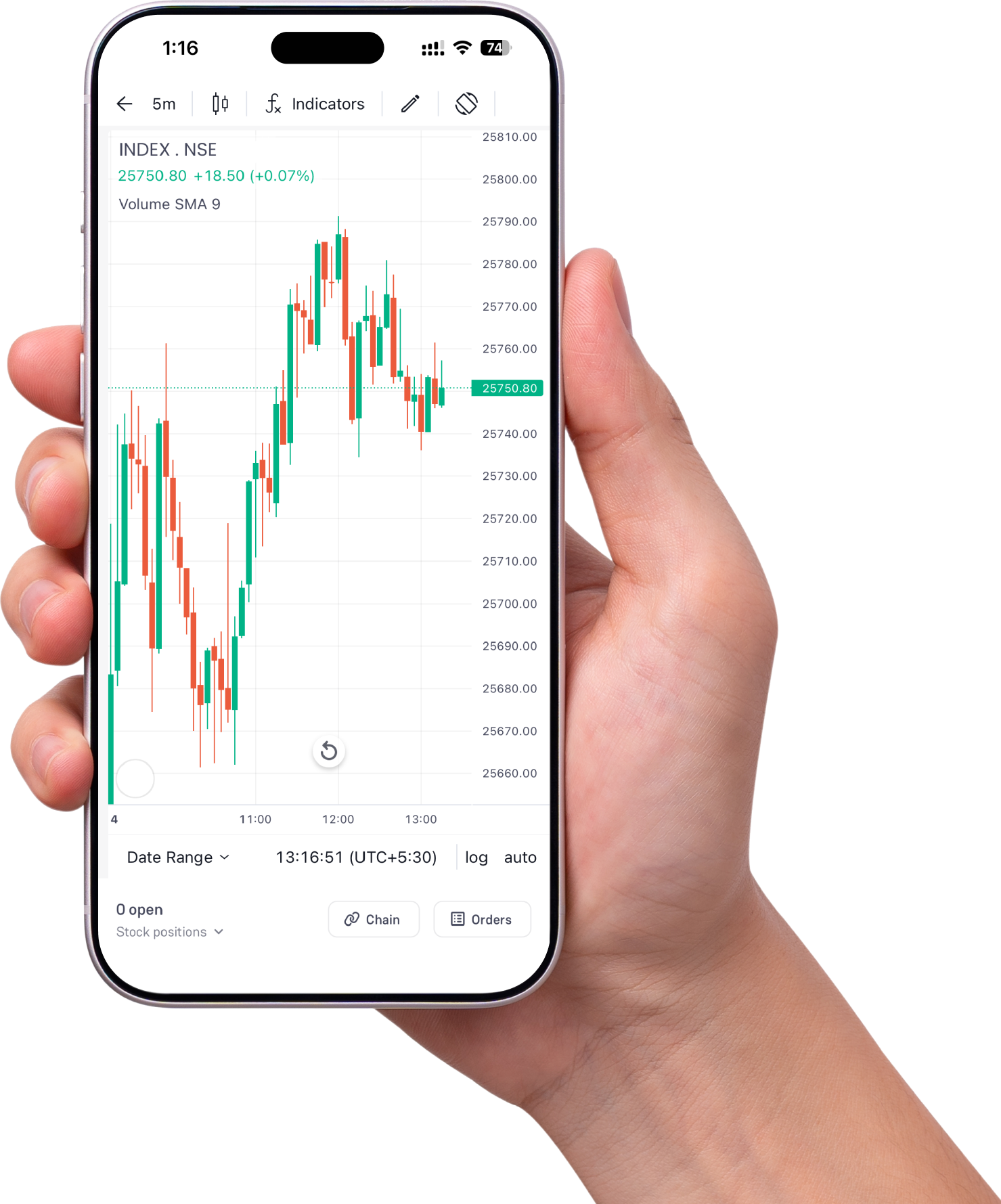
Experience India's seamless trading app with advanced features, intuitive design, and lightning-fast execution.
Unified Portfolio
All Assets, One App
Instant Market Alerts
Live Research, Zero Delay
Seamless Security
Biometric Login for Safe Trading
Actionable Ideas
Pre-built Options Strategies
Based on 27.4K reviews
1M+
Downloads