

- Advanced Hedging Tools
- Research Strategy Reports
Master Currency Trading
A research-backed platform to trade exchange-listed currency pairs with transparency and ease
Navigate Currencies with Conviction
Trade in Currencies. Capitalise on Market Movements

Macro Insights
Access expert currency research focusing on global economic indicators, RBI policies and FII flows.

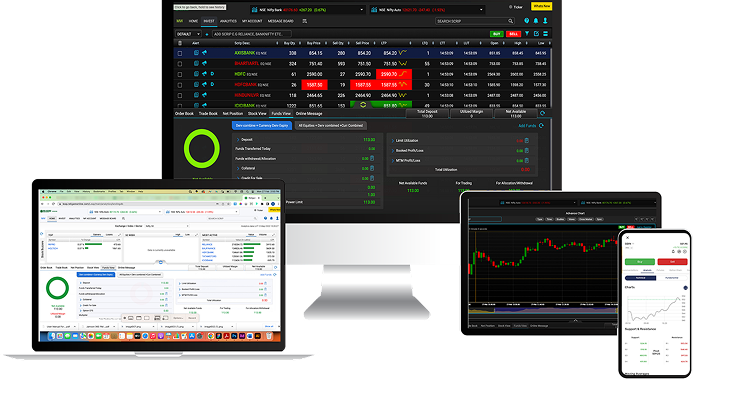
Advanced Charting
Analyse price action with professional Trading View tools and numerous technical indicators

Single-Screen Trading
Monitor real-time P&L and execute currency trades directly from your charts in one view


Margin Efficiency
Trade exchange-listed currency contracts with competitive margin requirements and ease

Automated Risk Controls
Secure your positions against market shifts with GTT orders and automated Stop-Loss triggers

Real-Time Alerts
Get instant updates on key economic events and price movements via WhatsApp and SMS
Features of Our Trading Platform
Smart, intuitive features to enhance your trading experience.

Instant Account Opening

Fully Integrated Trading Platform

In depth Research Expertise

Advanced Screeners and Charting Tools
How to Invest in Currency Markets
You can start your currency market trading by following these 4 simple steps.

Account Activation
Open your account, complete the KYC process, e-sign and unlock the Currency segment across all exchanges instantly.

Trade Global Currencies
Trade in RBI-approved currency pairs such as USDINR, EURINR, GBPINR, and JPYINR based on evolving market opportunities

Execute Orders
Use advanced charts to identify market direction. Place Long or Short orders with a single click across currencies.

Track and Manage
Monitor real-time MTM (Mark-to-Market) and margin status. Set stop-loss triggers to manage risk and exit positions at the right time.

Why Choose Religare Broking
We combine three decades of trust with advanced technology for seamless execution. Our clients trade with absolute confidence, backed by professional research and market insights

30+ Years
of Trust

All-in-One,
Web and Mobile Platform

1300+
Touch Points

Client Centric
Approach
Understanding Currency Trading
Here is a comprehensive guide to basics of currency trading and foriegn exchange markets.
How Currency Trading Works on Indian Exchanges
Currency trading is the buying and selling of one currency against another to gain from changes in the exchange rate. Indian residents can take part through exchange traded futures and options on pairs such as USD/INR, EUR/INR, GBP/INR and JPY/INR, subject to RBI regulations and the requirement for a valid underlying contracted exposure in INR currency pairs. All profits and losses are settled in rupees. Investors can access these contracts through eligible, SEBI-registered brokers that offer the currency derivatives segment. Check the broker's available contracts, charges and regulatory compliance before opening an account. Religare provides access to these contracts alongside equity, derivatives, and commodities, so currency exposure can be managed within the same account.
Understanding Currency Market Trading
Currency market trading is based on pairs. In USD/INR, the first currency is the base and the second is the quote, so a quote of 84 means one US dollar costs ₹84. A trader who expects the dollar to strengthen against the rupee buys the contract, and one who expects it to lose value sells. Exporters, importers and companies with foreign borrowings use the same contracts to hedge, while traders with eligible underlying exposure use them to act on views about interest rates, inflows and global risk sentiment.
Foreign currency trading on Indian exchanges, like any currency market trading, requires an understanding of the rules. It differs from the offshore forex platforms advertised online. Contracts here are cash settled in rupees and traded on recognised exchanges through registered brokers.
The RBI publishes an alert list of entities that are not authorised to deal in forex or to operate electronic trading platforms for forex transactions, so check that any provider is regulated before sending money.
Currency Trading in India: What is Available
Currency trading in India is limited to exchange traded derivatives on four INR currency pairs such as USD/INR, EUR/INR, GBP/INR and JPY/INR and three permitted cross currency pairs such as EUR/USD, GBP/USD and USD/JPY. INR pairs trade in futures and options, while cross currency pairs are available through separate contracts. Forex currency trading of this type needs the currency segment to be activated on your account, separately from equity.
Currency Trading Time in India
The currency trading time in India is shorter than the commodity session and is set by the exchange. The sessions are as follows.
| Contract type | Trading hours |
|---|---|
| INR pairs (futures and options) | 9:00 AM to 5:00 PM |
| Cross currency pairs (EUR/USD, GBP/USD, USD/JPY) | 9:00 AM to 5:00 PM |
| OTC market | 9:00 AM to 5:00 PM |
These currency market hours differ from the 24 hour global forex market, because Indian contracts follow exchange schedules. Currency market trading hours are therefore limited to the exchange’s scheduled sessions. . Positions may be carried overnight where the contract and broker's margin requirements permit; however, traders cannot execute fresh trades or adjust positions on the exchange while it is closed.
Anyone planning entries around currency market trading hours should note that intraday traders usually avoid the first few minutes after the open and the minutes before the close, when spreads can be wider. Exchanges can revise timings, so confirm the latest schedule before trading.
Contract Specifications
A contract is defined by its lot size, tick value, margin and expiry. For USD/INR, one lot is $1,000, the tick size is ₹0.0025 and each tick is worth ₹2.50 per lot, with margin generally around 2% to 4% of the notional value. The currency derivatives segment includes USD/INR, EUR/INR, GBP/INR and JPY/INR. The JPY/INR contract has a lot size of 1,00,000 yen. Monthly contracts generally expire two working days before the month's last business day. Weekly contracts, where available, have separate Friday expiry dates.
For example, a 0.25 movement in USD/INR represents 100 ticks, resulting in a ₹250 gain or loss per lot.
Tax and Charges
Securities Transaction Tax does not apply to exchange-traded currency derivatives. Profits are generally treated as non-speculative business income taxed at the applicable income tax rates. Brokerage, exchange transaction charges, GST on applicable services and charges, and stamp duty still apply. Confirm your individual tax treatment with a tax professional, as tax rules and rates may change.
How to Trade in Currency in India
Currency trading in India involves five key steps, from opening a trading account to placing and monitoring trades.
- Open an account: Complete KYC and open a Demat account with Religare.
- Activate the currency segment: This is requested separately from equity.
- Fund the account for margin: Check the requirement for the pair you plan to trade.
- Select the contract and expiry: Choose the pair, month and order type, then enter quantity in lots.
- Manage the position: Track mark to market movement and place a stop loss.
Currency Trading for Beginners
Currency trading entails following economic changes and beginners can begin by learning the USD/INR currency pair, the most liquid pair and trading with a single lot.
Key factors affecting the rupee include RBI policy, US interest rate decisions, crude oil prices and foreign portfolio flows. Foreign portfolio flows often track equity trading sentiment and move the rupee with it. Because the rate can move sharply around them.
Learn more about derivatives trading first, since currency contracts follow the same margin and settlement logic.
Strategies Used in Currency Exchange Trading
Traders use different strategies to analyse currency movements and identify potential trading opportunities. Common approaches include.
- Trend following: Trading in the direction of a sustained move, supported by moving averages.
- Range trading: Buying near support and selling near resistance when the currency pair trades within a defined price range.
- Event based trading: Managing positions ahead of or after policy announcements, while keeping stop-loss limits in place.
- Hedging: Protecting import or export payments against adverse movement.
Combine any approach with a fixed risk per trade, and plan trades around the exchange currency market hours rather than global quotes. The same discipline is useful in futures trading, where leverage plays a similar role.
Popular Currency Pairs
Indian exchanges list a focused set of pairs, each linked to a major trading relationship.
| Pair | What it represents |
|---|---|
| USD/INR | US dollar against the rupee, the most liquid contract |
| EUR/INR | Euro against the rupee |
| GBP/INR | British pound against the rupee |
| JPY/INR | Japanese yen against the rupee |
| EUR/USD, GBP/USD, USD/JPY | Cross currency pairs that do not involve the rupee |
Who Takes Part in Currency Trading
The segment has two broad groups. Hedgers, such as exporters, importers and companies with foreign currency loans, use contracts to manage exchange rate in advance. Speculators and traders take positions to earn from rate movements. Importers of crude oil, a contract also available under commodity trading, are among the largest buyers of dollars. Both groups add liquidity, helping reduce bid-ask spreads in actively traded pairs.
Advantages of Currency Trading
Given below are the currency trading benefits, including:
- Low margin: The deposit is a small share of the contract value.
- No STT: Securities Transaction Tax does not apply, which lowers cost.
- Cash settlement in rupees: No foreign currency changes.
- Hedging use: Businesses and individuals with foreign exposure can protect against adverse movement.
- Transparent pricing: Contracts trade on recognised exchanges with published rates.
Risks in Currency Trading
Leverage works both ways, and small adjustments in the rate could mean significant changes in your account. The exchange rates react quickly to RBI action, world interest rates and geopolitical happenings. There are restricted hours for trading and there may be breaks between sessions.
Use a stop loss on every position and avoid trading with money meant for other needs. Traders who prefer a defined maximum loss can look at options trading, where a buyer cannot lose more than the premium.
Choosing Among the Top Forex Trading Platforms
The top forex trading platforms for Indian residents are those from SEBI registered brokers that offer exchange traded currency contracts. Compare execution speed, margin clarity, charting, stop loss orders and customer support, and look for access to other segments so you can diversify, including mutual funds for a longer horizon. To begin, open a demat account with Religare and activate the currency segment.
Trade Anytime,
Anywhere
Experience seamless trading app with advanced features, intuitive design, and lightning-fast execution.
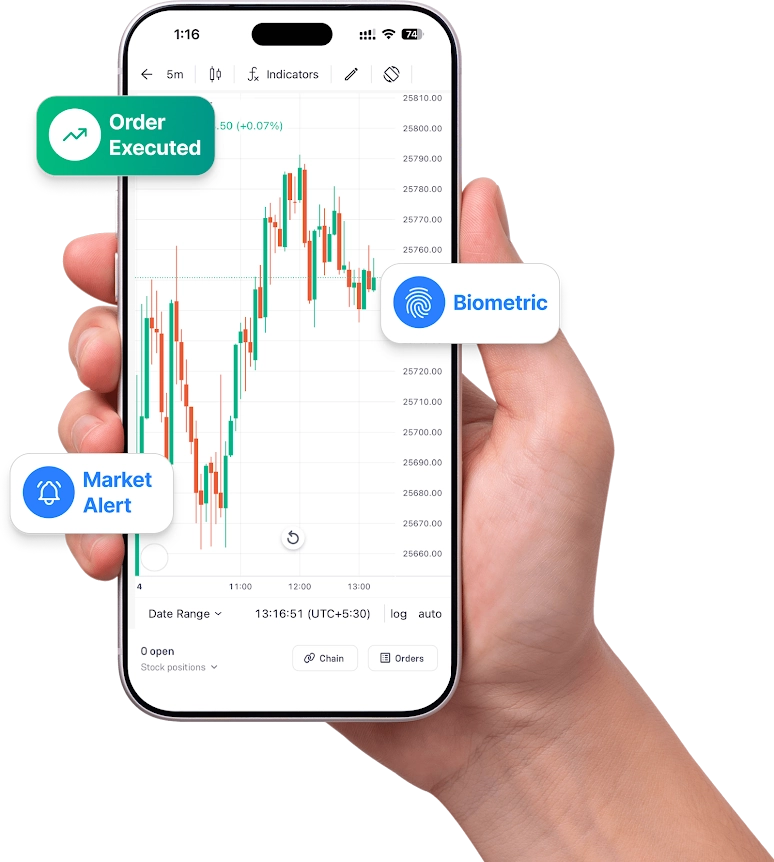
Unified Portfolio
All Assets, One App
Instant Market Alerts
Live Research, Zero Delay
Seamless Security
Biometric Login for Safe Trading
Actionable Ideas
Pre-built Options Strategies
Based on 27.8K reviews
1M+
Downloads