Tokenized Bonds vs Traditional Bonds: Key Differences Explained
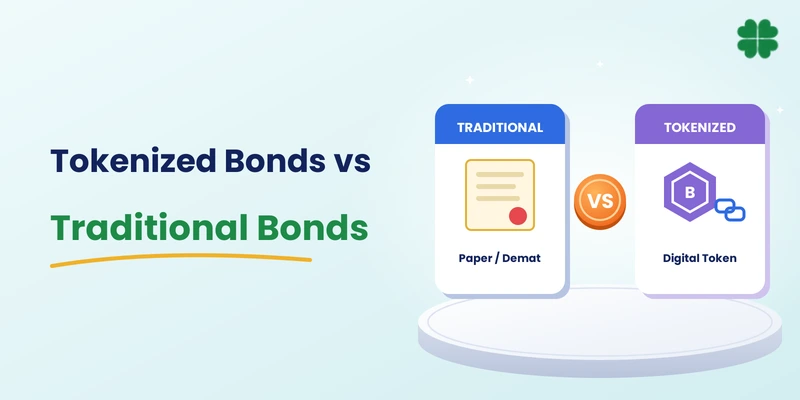
Traditional bonds exist as entries in a depository’s computer records, while tokenized bonds are corporate bonds issued, recorded and settled on a digital ledger. SEBI and the RBI launched the Demat 2.0 pilot for tokenized corporate bonds in September 2026, which brought the notion into focus for Indian investors. The primary distinction between tokenized bonds and ordinary bonds is how ownership is registered and how payment is settled.
What is a Traditional Bond?
A bond is a debt instrument in which an investor lends money to an issuer in return for interest and repayment of principal on maturity. Types of bonds in India include government securities, state development loans, corporate bonds and tax free bonds.
A traditional bond is held in dematerialised form with NSDL or CDSL, and trades take place on NSE or BSE or over the counter. Investors can learn more about how to invest in government bonds and explore types of government securities in India. Settlement of the bond and the payment happen through separate processes. The types of bonds available to investors differ in risk, tenure and return.
What is a Tokenized Bond?
A tokenized bond represents the same debt claim as a traditional bond, but the record of ownership is kept as a digital token on a distributed ledger. Important terms such as the coupon rate and payment dates can be written into a smart contract. In the Indian pilot, the ledger is private and permissioned, and the depositories hold the private keys, so investors do not have to manage keys themselves.
Tokenized Bonds in India: The SEBI and RBI Pilot
SEBI announced the launch of the Demat 2.0 pilot on 10 September 2026 under its regulatory sandbox. The first stage covered institutional issuance by REC, L&T and IIFL, which together raised ₹1,025 crore. The payment leg uses the RBI’s wholesale digital rupee, so the bond and the money settle together in one step. Secondary trading and retail access are planned for later stages, and no date has been confirmed.
Tokenized Bonds vs Traditional Bonds: Key Differences
The difference between tokenized bonds and traditional bonds can be seen across a few features:
| Feature | Traditional Bond | Tokenized Bond |
| Record of ownership | Depository book entry | Token on a ledger, with depository keys |
| Settlement | Bond and payment settle through separate steps, over T+1 to T+3 | Bond and payment settle together |
| Payment of interest | Through the registrar and banking system | Can be automated through smart contracts |
| Identity of the bond | ISIN, rating and rights | Same ISIN, rating and rights, with tokenization representing ownership |
| Retail access | Available through brokers | Subject to the eligibility and access conditions of the regulatory sandbox pilot |
| Legal footing | Established under existing law | Operating under a regulatory sandbox |
What Stays the Same?
A tokenized bond keeps the same ISIN, credit rating and investor rights as a conventional bond. Under the pilot, investors need no new demat account or fresh KYC, and SEBI states that the bond remains a security under the Securities Contracts (Regulation) Act, 1956.
Credit risk, interest rate risk and liquidity risk remain exactly as they are for any corporate bond. A lower rated issuer carries higher default risk whether the bond is tokenized or not.
Risks and Open Questions
The pilot operates under time-limited sandbox relaxations, so the legal status of issued tokens depends on subsequent regulation. Legal commentators have raised questions on whether the depository record or the ledger entry is the final proof of ownership, and on who bears losses after a technical failure.
Retail investors cannot yet participate, and liquidity in the secondary market is untested. Investors should treat current news as a signal of direction and not as a product available today.
Where Traditional Bonds Fit Now?
Until tokenized bonds open to retail investors, traditional bonds remain the practical route. Investors can compare corporate vs government bonds, check credit ratings from agencies registered with SEBI, and match maturity to their goals. Those new to the subject can start with the meaning of a bond and the basics of fixed income investment.
Conclusion
Tokenized bonds change the plumbing and not the promise. The issuer, rating, coupon and repayment risk remain those of a regular bond, while record keeping and settlement move to a ledger. Since retail access through the planned trading phase is still pending, investors can keep using traditional bonds and watch SEBI and RBI updates for the next phase.
FAQs on Tokenized Bonds vs Traditional Bonds
What is the main difference between tokenized bonds and traditional bonds?
Traditional bonds are held and transferred through depository records and settled through different processes. In contrast, tokenized bonds live on a digital ledger and the transfer of ownership and payment can happen at the same moment.
Are tokenized bonds legal in India?
Yes. SEBI’s Demat 2.0 pilot, launched on 10 September 2026, operates under its Regulatory Sandbox framework. SEBI has clarified that tokenized corporate bonds remain securities under the Securities Contracts (Regulation) Act, 1956, and continue to be governed by the applicable regulatory framework. Any specific regulatory relaxations are limited to the pilot’s defined scope and period.
Can retail investors buy tokenized bonds now?
No. The first step is the institutional offering and then there will be secondary trading rounds and civilian access at an unconfirmed date. Until access is opened, investors should stick to traditional bonds sold through registered brokers and keep an eye on pronouncements from SEBI and RBI.
Do tokenized bonds carry less risk?
No. The credit risk, interest rate risk and liquidity risk are inherent in the issuer and the market, not the technology. The ledger can shorten the period of settlement and operational friction, but does not improve the credit quality of the issuer or guarantee repayment.
Will tokenized bonds replace traditional bonds?
That is not confirmed. The pilot tests faster settlement and automation, and regulators may expand it in stages to more participants and instruments. For now, both forms keep the same ISIN, rating and rights, and traditional bonds remain the main option for most retail investors.