

- Fast Execution
- Advance Charts and Tools
Trade Smarter, Control Risk Better
Maximize your market exposure with high-speed execution tools and real-time margin tracking for a disciplined trading experience.
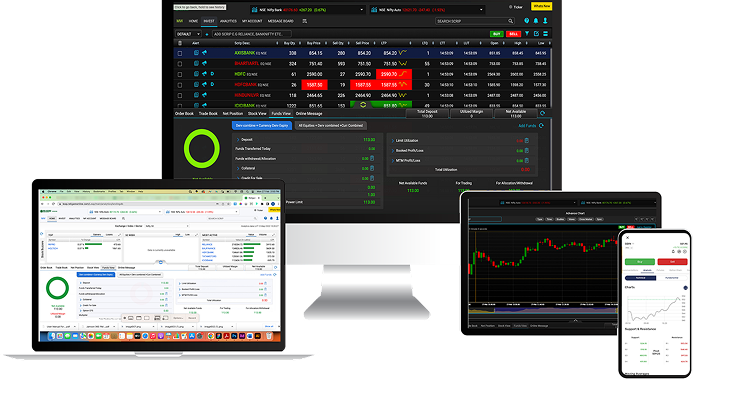
Strategic Futures Trading Starts Here
An all-in-one, intuitive platform to help you navigate markets like a pro. Access advanced tools, research insights and pro charts.

Advanced Market Charts
Deep-dive into trends. Analyze price action and historical data to identify right trends and trade directly from charts.

Seamless Order Execution
Capture momentum instantly. Execute high-volume, multi-asset orders with a single click for optimal entries and exits.

Screeners
Track live screeners to discover stock movements and identify emerging trends to stay ahead in the markets.
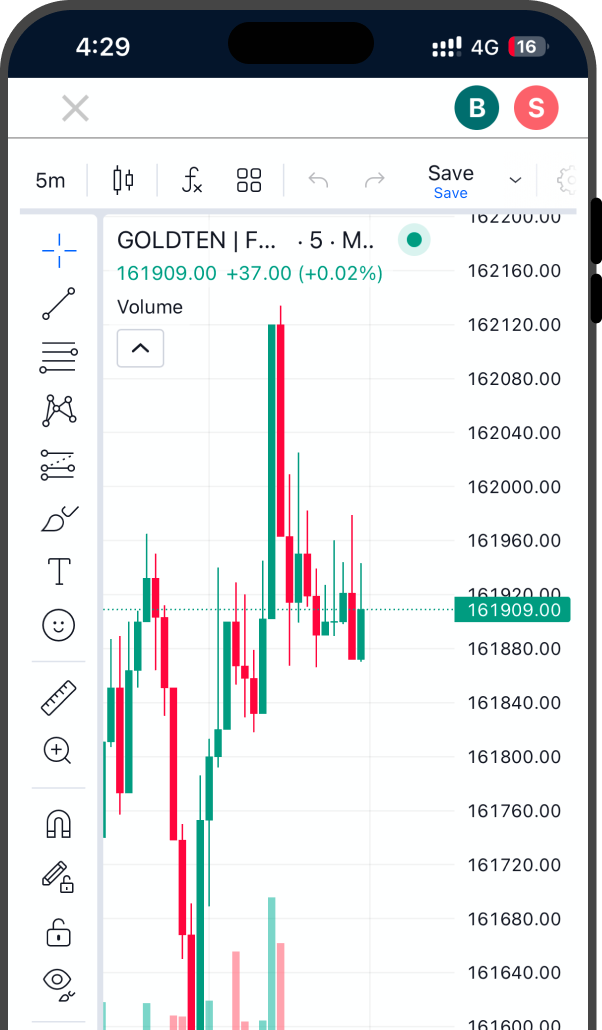

Set Alerts
Never miss trading opportunities by setting alerts on price, volumes and support levels to get notified instantly.

Integrated Margin Control
Trade efficiently. Monitor initial and maintenance margins in real-time to manage exposure and stay disciplined.

Margin and Stock Pledging
Pledge your existing holdings and unlock additional collateral margin for futures positions without selling your assets.
Most Active Contracts
Track contracts with the highest open interest build-up
Symbol↕ | LTP↕ | Contracts↕ | OI%↕ | Build up↕ |
|---|
Features of Our Trading Platform
Smart, intuitive features to enhance your trading experience.

Instant Account Opening

Fully Integrated Trading Platform

In depth Research Expertise

Advanced Screeners and Charting Tools
How to Trade Futures with Religare
Start your futures trading journey in 4 simple steps. Access high-leverage market exposure, real-time data and advanced execution tools.

Account Activation
Open your account, complete the KYC process, e-sign registration and unlock the Equity Derivatives (FnO) segment across all exchanges instantly.

Add Funds
Transfer funds securely to meet your initial margin requirements. Use margin calculators to evaluate your capital efficiency and buying power.

Execute Orders
Use advanced charts to identify market direction. Place Long or Short orders with a single click across stocks, indices, or commodities.

Track and Manage
Monitor real-time MTM (Mark-to-Market) and margin status. Set stop-loss triggers to manage risk and exit positions at the right time.

Why Choose Religare Broking
We combine three decades of trust with advanced technology for seamless execution. Our clients trade with absolute confidence, backed by professional research and market insights.

30+ Years
of Trust

All-in-One,
Web and Mobile Platform

1300+
Touch Points

Client Centric
Approach
Understanding Futures Trading
Here is a comprehensive guide on Futures Trading so that you can navigate market trends with capital efficiency and strategic control.
What is Future Trading in Stock Market?
A futures contract is a standardized agreement to buy or sell an asset at a set price on a specified future date. Unlike cash markets, these contracts are traded on regulated exchanges and both parties, i.e. the buyer and seller, are obligated to fulfil the trade upon expiry.
Futures are leveraged instruments that require a margin deposit, which means they have a significant market exposure, resulting in higher risk and return potential. This requires disciplined risk management.
In simple terms, you can understand futures trading as: instead of buying an asset today, you agree today on a price you will transact at later, profiting if the market moves in your favour, and losing if it moves against you, regardless of the asset class (equity, index, commodity or currency).
How Does Futures Trading Work?
To understand how futures trading work, one must know about key elements of a Futures Contract. These elements determine how a future contract will trade:
-
- Underlying Asset: Every futures contract is based on an underlying asset like stock, index, commodity or currency.
- Lot Size: Futures trade in fixed lot sizes as specified by the exchange. You can't buy or sell a fractional lot.
- Expiry Date: Each contract expires on a set date after which it is settled. Derivative contracts on the NSE expire on Tuesdays (weekly and monthly), while BSE derivatives expire on Thursdays. Expiry happens previous trading day in case of public holidays.
- Initial Margin: You don't pay the full contract value upfront. You deposit a margin (a percentage of the contract's notional value) set by the exchange, which is why futures are leveraged.
- Mark-to-Market Settlement: Gains and losses on your position are settled daily based on the day’s settlement price, not just when you exit the trade.
Because of daily mark-to-market settlement and leverage, gains and losses can exceed your initial margin amount. This makes futures more suitable for traders who actively monitor their positions and understand margin requirements, rather than long-term buy-and-hold investors.
Types of Future Trading
Futures markets span various asset classes, enabling traders to diversify risk. The various types of future trading strategies are:
Equity futures
Contracts on individual stocks, such as large-cap or mid-cap companies. These let you take a leveraged view on a specific company's price movement without holding the shares outright, and are commonly used both for directional trades and to hedge existing stock holdings. To trade the underlying shares directly instead, explore equity trading with Religare.
Index futures
Based on indices like Nifty 50 or Sensex, widely used for market-wide exposure. Instead of betting on a single stock, index futures let you take a position on the broader market's direction in one trade, which is why they're popular among traders looking to hedge a diversified portfolio. Learn more about how these fit into the wider derivatives market on our derivatives trading page.
Commodity futures
Diversify into gold, crude oil, and agriproducts, via MCX. Commodity futures let you participate in price movements of physical goods without ever taking delivery, and are often used to hedge against inflation or global supply-side shocks. Read more about how these contracts work on our commodity trading page.
Currency futures
Trade movements in exchange rates between currency pairs. These contracts are typically used to hedge currency risk on international transactions or to take a directional view on pairs like USD-INR, and trade on NSE and BSE with standardised lot sizes and expiry dates. Explore this further on our currency trading page.
Core Features of Future Trading
Futures Trading involves leverage through margin requirements, daily mark-to-market settlement, fixed contract expiries, standardized contract specifications, and centralized clearing. These features make futures an effective instrument for speculation, hedging, and efficient capital utilization, while requiring disciplined risk management due to the impact of leverage. Let’s understand these features below:
- Capital Efficiency: Control large positions with a fraction of the total value as the exchange-mandated initial margins.
- Directional Flexibility: Take long positions to benefit from rising markets or short positions to benefit from falling markets.
- Daily Mark-to-Market (MTM): Daily settlement of profits and losses ensures transparency and reduced credit risk.
- Hedging Advantage: Protect your portfolio against adverse price movements by taking offsetting futures positions.
- High Liquidity: Futures contracts have predefined lot sizes, expiry dates, and contract specifications, making trading transparent and efficient.
- Centralized Clearing & Reduced Counterparty Risk: The clearing corporation acts as the counterparty to every trade, significantly reducing the risk of default.
Who Should Start Future Trading?
Futures are marked to market daily and carry no built-in cap on loss (unlike buying an options trading, where loss is limited to the premium paid), price volatility directly affects your margin account. A sharp adverse move can trigger a margin call requiring you to add funds immediately. Thus, futures is ideal for traders who can actively monitor positions and manage risk, and is definitely not meant for the passive investors.
- Experienced Traders: Individuals with a strong understanding of market trends and price action.
- Risk-Aware Investors: People who understand the mechanics of leverage and margin maintenance.
- Strategic Hedgers: Portfolio holders looking to protect their equity investments from volatility.
- Disciplined Capital Managers: Traders capable of handling margin calls and maintaining emotional control during market swings.
Beginners interested in Futures Trading should start with smaller positions and work their way up as they get more comfortable. This is general guidance, not a personalised investment advice. Please assess your own financial situation, or consult a financial advisor, before trading futures.
Futures Trading Strategies
Let’s discuss below the common futures trading strategies. However, before adopting any futures strategy, know that each strategy carries the risk of loss exceeding your initial margin, since futures (unlike buying options) don't cap downside at a fixed premium. Position sizing and a predefined stop-loss are thus considered more important to outcomes than the strategy itself.
- Trend Following: The investor takes a long or short futures position in the direction of an established price trend, typically confirmed using moving averages or price action.
- Hedging: Holding a futures position opposite to your existing equity or commodity exposure, to offset potential losses if the market moves against your core holding.
- Calendar Spread: Simultaneously buying and selling futures contracts of the same underlying asset but different expiry dates, aiming to profit from the price difference between them.
- Arbitrage: Exploiting price differences between the cash market and futures market (or between two related contracts) for the same underlying asset.
- Basis Trading: Tracking the difference between a futures contract's price and the underlying asset's spot price, which tends to narrow as expiry approaches.
SEBI Regulations Every Futures Trader Should Know (2026 Update)
Futures trading in India is regulated by SEBI, and the rules governing contract sizes, margins and expiry cycles have changed significantly since late 2024. Key points to know:
- Higher minimum contract size: SEBI has raised the minimum notional value for index derivative contracts, which has increased lot sizes across major index futures — meaning a single lot now requires meaningfully more margin than it did before 2024.
- Rationalised weekly expiries: Each exchange now offers only one weekly index derivatives contract, with other index contracts moving to monthly expiry only.
- Stricter intraday margin monitoring: Exchanges now conduct intraday risk monitoring, not just at day-end, so intraday breaches can be flagged and penalised in real time.
- Additional margins: An additional margin buffer typically applies on and around expiry day for index derivatives, raising the cost of holding large positions into the final session.
These changes were introduced specifically to curb excessive speculative activity and improve risk management in the retail F&O segment. Since lot sizes and margin requirements are revised periodically, always check current values on the exchange or your broker's platform rather than relying on older figures.
Trade Anytime,
Anywhere
Experience India's seamless trading app with advanced features, intuitive design, and lightning-fast execution.
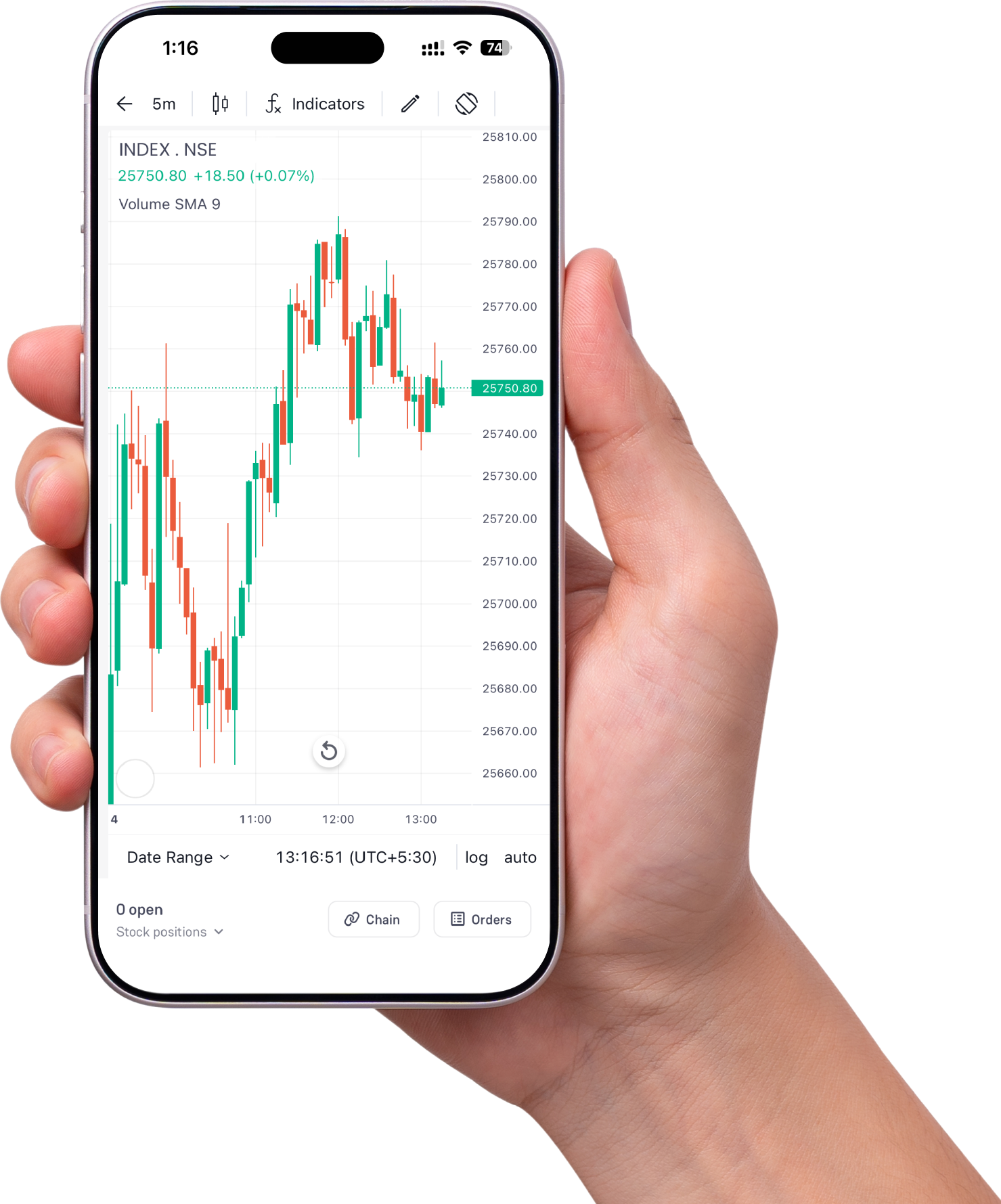
Unified Portfolio
All Assets, One App
Instant Market Alerts
Live Research, Zero Delay
Seamless Security
Biometric Login for Safe Trading
Actionable Ideas
Pre-built Options Strategies
Based on 27.4K reviews
1M+
Downloads