Every futures contract has an expiry date, but a trader’s market outlook may extend beyond it. Futures rollover allows traders to carry an existing position into the next contract month. The process involves closing the current contract and taking an equivalent position in the next-month contract. The price difference between the two contracts determines the rollover cost or credit.
Rollover Meaning in Stock Market Terms
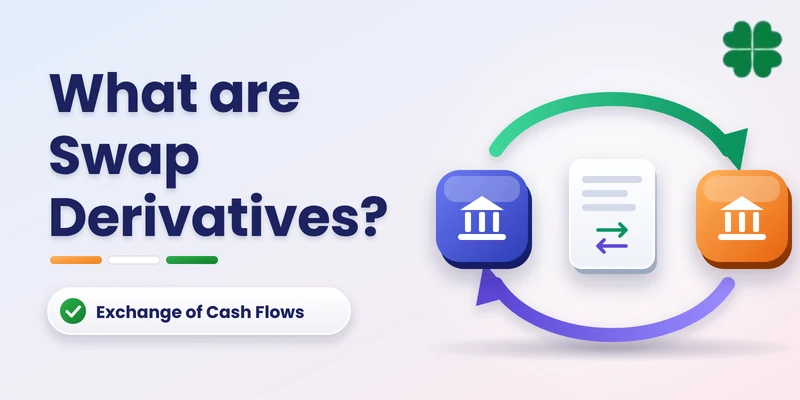
The rollover meaning in stock market is simple: it is the act of carrying a position from a contract that is about to expire into a later one. A trader closes the expiring futures position and reopens the same direction in a later contract, so the market view continues past expiry. A trader holding October Nifty futures who wants to continue the position would sell the October contract and buy the November contract. That is what rollover in stock market practice involves: two orders placed together, one to exit and one to re-enter. A position that is not rolled simply ends at expiry and is settled as per the contract terms, with profit or loss reflected in the account.
Why Traders Use Futures Rollover
Understanding what rollover means helps traders decide when to use it. Futures rollover is a routine part of derivatives trading and suits traders whose view has not played out within the life of one contract. Positional traders use it to avoid exiting a trade they still believe in. Investors who hedge a share portfolio with index futures use it to keep the hedge in place month after month. In both cases, rolling is cheaper and faster than rebuilding the position from scratch, though it is not free.
How to Rollover Futures
Knowing how to rollover futures comes down to a short sequence, ideally completed in a single session so that the position is never left uncovered.
- Check that your account has enough margin for the next month contract, since margin is blocked on the new position.
- Pick the next month contract of the same stock or index.
- Sell the expiring contract if you are long, or buy it back if you are short.
- Open the same position in the next month’s contract with the same number of lots.
- Review the confirmed prices, since the difference between the two legs is your rollover cost.
Many platforms offer a one-click rollover or spread order to place both trades together and reduce slippage (the difference between the expected and actual trade price). Understanding how futures trading works can also help traders manage these contract changes.
How to Calculate Rollover Cost
Rollover cost has two parts: the price gap between the two contracts, and the charges on the transaction. The gap, called the spread, is the next month price minus the near month price. Multiplying it by the lot size gives the cost in rupees, and dividing it by the near month price and multiplying by 100 gives the cost as a percentage.
As an illustration, take a long Nifty position of one lot, assuming a lot size of 65. The prices are hypothetical and used only to explain the calculation. Actual lot sizes should be checked against the applicable NSE contract specifications.
| Item |
Calculation |
Result |
| Near month price |
Assumed |
24,000 |
| Next month price |
Assumed |
24,120 |
| Spread |
24,120 minus 24,000 |
120 points |
| Spread cost in rupees |
120 x 65 |
₹7,800 |
| Spread cost as a percentage |
(120 / 24,000)*100 |
0.5% |
| STT on the sell leg |
24,000 x 65 x 0.05 percent |
₹780 |
STT on futures is 0.05% from 1 April 2026. Brokerage, exchange charges, GST and stamp duty come on top. A premium in the next month contract is not automatically a bearish sign, since it also reflects financing costs, time to expiry and expected dividends. If the next month contract trades at a discount, the same arithmetic produces a gain for a long position.
Reading Rollover Percentage
Rollover data shows how much open interest is carried into the next series. Rollover percentage is calculated by dividing the open interest in the next-month contract by the combined open interest in the near-month and next-month contracts, and multiplying the result by 100.
Typical readings are 75 to 80% for Nifty futures and 80 to 90% for Bank Nifty futures. A reading above the three month average suggests stronger conviction, and one below it suggests hesitation. It should be read together with price and open interest, because rollover data cannot prove that a trader who closed the near month position opened the next month position.
How to Rollover Options
Options trading works differently, which is why the question of how to rollover options needs its own answer. There is no spread order between two expiries in the same way, and the premium matters more than the price gap. The usual method is to close the existing option and open a new option at the next expiry, either at the same strike or at a different one. A seller might roll to a later expiry to collect more premium, while a buyer might roll to give a trade more time. Time decay and changes in volatility can disappear value quickly, so the cost of the new premium should be weighed against the chance of the market view playing out.
Timing and Expiry
NSE monthly futures contracts expire on the last Tuesday of the expiry month. If that day is a trading holiday, the contracts expire on the previous trading day. Most rollover activity takes place during the last two or three trading sessions before expiry. Rolling earlier, when both contracts have sufficient liquidity, may help traders obtain a tighter spread.
Mistakes to Avoid
Rollover extends a position, and it is not a chance to chase losses. A losing trade that is rolled keeps its loss and adds the cost of rolling. Check margin before expiry, avoid rolling illiquid stock futures where slippage can be large, and place both legs in the same session. Traders who want to start can open a Demat account with Religare and enable the derivatives segment.
FAQs
Is rollover compulsory?
No. A futures position that is not rolled ends at expiry and is settled as per the contract terms.
Does rollover attract STT?
Yes. STT applies to the sell leg of the futures contract, along with brokerage, exchange charges, GST and stamp duty.
When should I roll my position?
Many traders roll in the last two or three sessions before expiry, though rolling a day or two earlier can sometimes provide tighter spreads and better liquidity.
Can I roll a short futures position?
Yes. You buy back the expiring contract and sell the next month contract in the same quantity.
Is a high rollover percentage bullish?
Not by itself. It shows the proportion of open interest carried into the next-month contract. The direction of the market must be assessed using price movements, open interest changes and other market indicators.
How are options rolled?
Options are rolled by closing the existing option and opening a new option in the next expiry, at the same strike or at a different one.