Impact of Policy Shifts and Tariffs on Markets
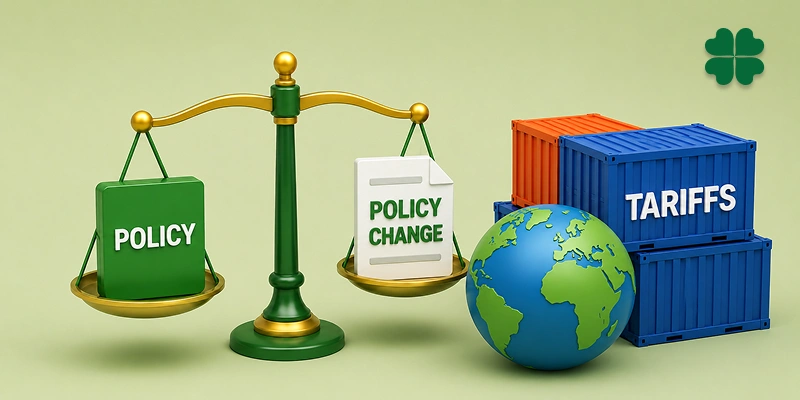
Financial markets have always been influenced by policy choices and trade actions, but in recent years, the effect has become even more significant. Changes in interest rates or cross-border tariffs directly impact investor sentiment, corporate profitability and global capital flows. Understanding the impact of policy changes on the stock market and the effects of tariffs on global trade is essential for investors, businesses, and policymakers alike. Markets in 2026 are becoming increasingly sensitive to both the underlying economic fundamentals and swift utterances on policies and geopolitical happenings. The world’s economies are interdependent, and therefore a local decision will lead to global instability. This makes it crucial to evaluate how government policies and trade tensions influence different sectors and investment strategies.
Understanding Policy Shifts and Market Dynamics
Government policies affect the markets in various ways, such as fiscal policies, monetary policy and regulatory policies. Such changes can usually dictate liquidity, cost of capital and investor confidence.
1. Monetary Policy and Interest Rates
Central banks play an important role in determining market conditions. The increase in interest rates makes borrowing costly and thus slows down the growth of the economy and decreases corporate profits. On the other hand, low rates stimulate borrowing and investment, which improves stock markets. The impact of policy changes on the stock market is particularly evident during rate cycles. For instance:
- Equity markets tend to correct with a rise in rates.
- Growth stocks are relatively rate-sensitive.
- There may be an increase in interest margins in financial sectors.
2. Fiscal Policy and Government Spending
Economic growth can be stimulated by fiscal policies, e.g. infrastructure spending or tax reforms. Expansionary policies are usually favourable to markets, whereas austerity policies can depress the mood. The government policy market impact is especially visible in:
- Infrastructures and construction industries during public spending booms.
- The consumer sectors after tax cuts or subsidies.
- Policy incentives to industrial development.
3. Regulatory Changes
Regulatory reforms may either open the door or cause uncertainty. As an example, the norms of stricter compliance can raise operational costs, whereas deregulation can boost profitability.
Additional Read: Union Budget 2026: What Investors & Traders Should Know
Tariffs and Their Role in Global Trade
Tariffs refer to taxes charged on imported goods and services, and they are commonly applied to shield domestic industries or in cases of geopolitical tension. But they can disrupt supply chains and influence international trade.
Direct Impact on Trade Flows
The effects of tariffs on global trade are immediate and measurable. Higher tariffs increase the cost of imports, leading to:
- Reduced trade volumes
- Transformation of supply chains.
- Increased production costs
Companies tend to react by moving production or sourcing to other markets.
Import Export Tariffs 2026 Trends
The landscape of import-export tariffs in 2026 is an indication of the rising protectionism and strategic trade policies. Key trends include:
- Heavy tariffs on important industries like semiconductors and energy.
- Trade blocs in the region, with emphasis on local production.
- Strategic tariffs to eliminate reliance on some countries.
These trends are transforming the way trade is done throughout the world and are affecting investments.
Trade Wars and Stock Market Volatility
Trade wars occur when countries impose retaliatory tariffs against each other, escalating tensions and disrupting economic stability.
Immediate Market Reactions
The impact of trade wars on stocks is often negative in the short term due to uncertainty. Key effects include:
- Increased market volatility
- Decline in export-orientated companies.
- Multinational corporations are under stress.
Investors tend to shift towards safer assets such as gold or government bonds during such periods.
Sector-Specific Impact
Different sectors respond differently to trade conflicts:
- Technology and manufacturing sectors face supply chain disruptions.
- Agriculture may experience low export levels.
- Protectionism can be an advantage to domestic-oriented industries.
Geopolitical Risks and Market Sensitivity
Geopolitical tensions amplify the effects of policy changes and tariffs. The term geopolitical risk markup reflects how global uncertainties influence market support levels and investor confidence.
Key Sources of Geopolitical Risk
- Trade conflicts among the key economies.
- Unstable politics in strategic areas.
- Sanctions and embargoes
- Military conflicts
These factors can trigger sudden market corrections and capital flight.
Market Behaviour During Geopolitical Events
Markets often react swiftly to geopolitical developments:
- Higher risk aversion and volatility.
- Trade off offensive industries like manufacturing and services.
- International investment fluctuations due to currency fluctuations.
Read Also: Indo-US Trade Deal 2026: How It Will Boost FII Inflows
Corporate Earnings and Policy Influence
Policy shifts and tariffs directly impact corporate earnings, which in turn influence stock prices.
A) Cost Pressures and Margins
Tariffs add to the cost of inputs for companies that depend on imports. This is capable of reducing profit margins unless the costs are transferred to the consumers.
B) Revenue Implications
Export-orientated companies may face declining revenues due to reduced demand or retaliatory tariffs. This highlights the trade war impact on stocks, particularly for global firms.
C) Strategic Adjustments
Companies often adapt by:
- Diversifying supply chains
- More localisation of production.
- Currency and policy risk hedging.
Investor Sentiment and Behaviour
The psychology of investors is important to the market response to policy changes and tariffs.
A) Risk Perception
The perceived risk is raised by policy uncertainty and results in investors being risk-averse. This usually leads to:
- Reduced equity exposure
- Greater investment in fixed-income assets.
- Bias towards steady dividend-yielding stocks.
B) Long-Term vs Short-Term Impact
Long-term consequences of actions are subject to changes based on the sustainability of policies and the economic fundamentals, whereas the short-term market responses are volatile.
Emerging Market Perspectives
Policy changes and tariffs are especially sensitive to emerging markets because they rely on international trade and capital flows.
1. Capital Flows and Currency Volatility
Capital outflows due to policy changes in developed economies may cause the depreciation of the currency and the instability of the market in the emerging markets.
2. Opportunities Amid Challenges
Nevertheless, emerging markets can enjoy the following despite risks:
- Supply chain diversification
- Increased domestic consumption
- Policy-driven growth initiatives
Sectoral Analysis of Policy and Tariff Impact
1. Technology Sector
The technology sector is prone to trade barriers and tariffs since it has highly globalised supply chains.
2. Energy Sector
Energy markets are influenced by both policy decisions and geopolitical factors, affecting prices and investment flows.
3. Financial Sector
Banks and other financial institutions are directly affected by the changes in the interest rate and the policies of the regulators.
4. Consumer Goods
Import tariffs may escalate prices, demand and profit margins.
Strategies for Navigating Policy and Tariff Risks
- Diversification: The risks related to policy changes should be reduced by diversification of investments between sectors and geographies.
- Focus on Fundamentals: Volatility that is caused by policies can be resisted by strong fundamentals and strong business models.
- Monitoring Policy Developments: It is important to keep updated on the policies and trade developments of the government so as to make informed investment decisions.
Cost Implications of Policy Shifts and Tariffs
Policy changes and tariffs introduce both direct and indirect costs across the economy.
1. For Businesses
- Higher production costs due to high import duties.
- Regulatory change compliance costs.
- Restructuring costs in the supply chain.
2. For Consumers
- Increased price of imported commodities.
- Reduced purchasing power
- Inflationary pressures
3. For Investors
- Portfolio volatility
- The losses that can be incurred in the market correction.
- Delayed investment opportunity costs.
Understanding these cost implications is crucial for evaluating the broader market impact of government policy.
Read also: SEBI Cuts Mutual Fund Expense Ratios
Key Takeaway
Even in 2026, the forces behind market behaviour are still strong due to policy changes and tariffs. Their effects extend beyond short-term economic effects and have long term effects on the patterns of investment and international trade. The impact of policy changes on stock market is evident through fluctuations in valuations, sector performance, and investor sentiment. Those investors and businesses which actively track policy changes, spread risks and emphasise resilience are more likely to cope with this changing environment.
Frequently Asked Questions (FAQs)
How do policy changes affect the stock market?
Policy reforms affect the interest rate, taxation, and regulation, which have a direct effect on corporate profits and investor confidence. The impact of policy changes on stock market is often seen through price volatility, sector rotation, and shifts in investment strategies based on economic outlook and policy direction.
What is the tariff’s effect on global trade?
The tariffs’ effect on global trade includes higher costs for imported goods, reduced trade volumes, and supply chain disruptions. Companies could either change sourcing relations, or consumers could experience higher prices, which would eventually impact global trade relations and the economy.
How do Trade wars impact Stocks?
The trade war impact on stocks typically results in increased volatility and uncertainty. The export-based companies and multinational corporations tend to lose their revenues, whereas the defensive industries might be improved. Long term trade wars tend to drive investors towards less risky investments.
What is the Government policy’s market impact on different sectors?
The government policy market impact varies across sectors. As an illustration, infrastructure is a beneficiary of public expenditure, financials are sensitive to changes in interest rates, and technology is subject to regulation. The sectors react differently based on the type of change in policy.
Why are Geopolitical risks important for markets?
The term geopolitical risk markup reflects how political tensions, conflicts, and trade disputes influence market stability. These risks may cause abrupt price fluctuations, investor confidence, and capital outflows to less risky investment models.