How to Build a Diversified Investment Portfolio?
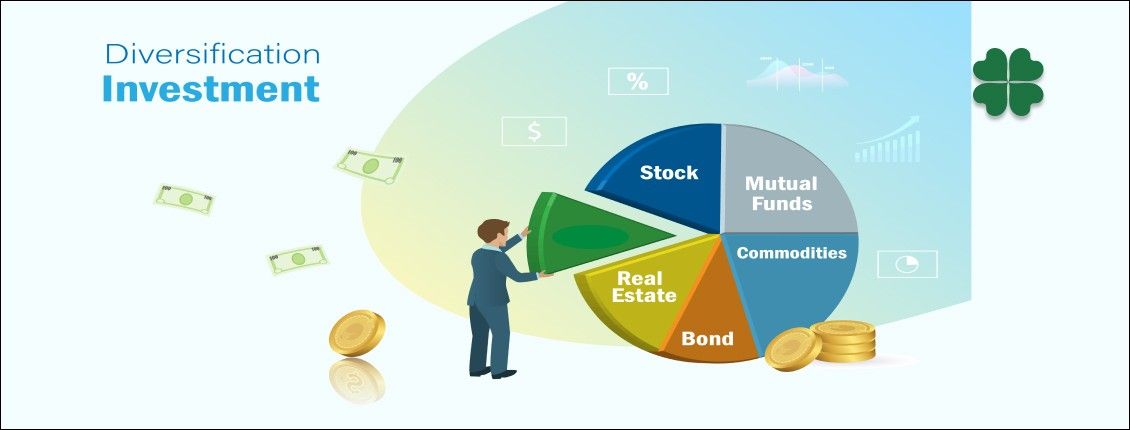
It is not only a matter of choosing the right stocks or funds that perform well, but it is also a matter of risk and reward. That is where diversification comes in. A balanced investment portfolio will assist you to reduce risk, average returns and accumulate long-term wealth without relying excessively on a single investment or market trends. It reduces the total risk in your portfolio and also offers you the possibility to gain consistent returns under various market conditions. Diversification is not only a smart strategy, but also necessary for Indian investors working in a constantly changing economic environment.
What is a Diversified Investment Portfolio?
In simple terms, a diversified investment portfolio is a combination of various kinds of investments that synergise to minimise risk and enhance returns in the long run. It is based on a conventional rule: Do not put all your eggs into one basket.
Diversification refers to the process of allocating your funds to different asset types such as stocks, bonds, real estate, cash, etc., and within a given asset type. The idea is to minimise the risk of the poor performance of any of the single investments.
The Importance of Diversification
Diversification just refers to the distribution of investments in various asset groups such as equity, debt, and gold. This strategy will ensure that any underperformance in one aspect does not have a huge adverse effect on your overall returns. This is particularly applicable in India, where market conditions tend to respond to international affairs like currency changes, oil prices, fluctuations in interest rates or geopolitical activities.
The reason why Diversification is important:
The fundamental reasons why diversification is required by investors of all levels include:
- Risk Reduction: Reduced exposure to high losses in cases where one investment is not performing well.
- Smoother Returns: Assists in balancing volatility since various assets respond differently in different market conditions.
- Opportunity Capture: Places you in a good position when various industries or markets boom at various times.
- Higher Risk-Adjusted Returns: You can achieve better returns with less risk compared to an undiversified strategy.
- Remark: Diversification will not eliminate the risk of losing money, but it will reduce the impact of underperforming assets.
Core Steps to Create a Diversified Investment Portfolio
The following is a step-by-step process of developing an all-rounded investment portfolio:
Define Your Financial Goals
Determine the purpose of your investment: It is necessary to decide the objective of your investment such as retirement, education, purchasing property, or wealth growth etc. Identify your investment horizon: Long-term objectives give the option to have more growth-oriented investments. Determine your risk level: Risk levels such as low, medium, and high directly influence your investment blend.
Select the Appropriate Asset Classes
A diversified portfolio normally comprises several categories of assets: Core Asset Classes to Include:
- Equities (Stocks): Long-term and higher returns which are growth-oriented.
- Fixed Income (Bonds): It is stable and pays off well.
- Real Estate / REITs: A possible inflation hedge and substitute income.
- Commodities (Gold, etc.): Offers stability in the volatile market.
- Cash or Cash Equivalents: Manage liquidity to use in case of emergencies or opportunities.
Spread Investments Within Asset Classes
The diversification is not only about the possession of various classes but also the diversification within each one of them. Within Stocks:
- Various industries such as Technology, Healthcare, Finance, Consumer Goods etc.
- Market caps can be large, mid, or small.
- Geographies both local and global.
Within Bonds:
- Government
- Corporate
- Short-term and long-term maturities.
Mutual Funds and ETFs for Easy Diversification
It may be problematic to invest in a large number of stocks or bonds individually. Here’s where funds help:
- Index Funds and ETFs: A single investment is exposed to a broad set of securities.
- Asset Allocation Funds: These are types of funds that are automatically diversified according to their target goals e.g., retirement funds.
This simplifies diversification and makes it cost-effective and efficient for both beginners and experienced investors.
Open your Demat account Today!
Review and Rebalance Periodically
Once you have built your portfolio, check it regularly. Rebalancing is the process of returning to your initial investment in the case that certain investments have increased at a faster rate than others. Example: When stocks have increased at an unrealistic rate and now constitute 70 per cent of your portfolio as compared to 60 per cent, sell some stocks and purchase bonds or other investments. Rebalancing should be performed on a semi-annual or annual basis.
Diversified Portfolio Investment Examples
Allocation may vary depending on the risk profile:
Aggressive (High Growth Focus)
- 70–80% Equities
- 10–15% Bonds
- 5–10% Alternatives/Cash
Balanced (Moderate Risk)
- 50–60% Equities
- 20–30% Bonds
- 10–15% Real Estate/Commodities
Conservative (Low Volatility)
- 30–40% Equities
- 40–50% Bonds
- 10–20% Cash/Alternatives
These are sample ratios. Personal factors like age and objectives should direct your allocation.
Common Mistakes to Avoid During Portfolio Diversification
Portfolio diversification is good but only when done well.
Mistake 1: Over-Diversification
- It is unnecessary to have too many funds or assets which will dilute returns without any actual risk reduction.
- Concentrate on quality and purposeful diversification.
Mistake 2: Correlation Ignoring
Purchasing numerous tech stocks will not diversify because they all act similarly in a recession.
Mistake 3: Not Rebalancing
In the absence of rebalancing, your risk profile slowly changed.
Mistake 4: Chasing Trends
No proper strategy is involved in the purchases of “hot assets” resulting in poor risk management.
Advanced Portfolio Diversification Tips
After creating a basic diversified portfolio, you can add the following:
Diversify Geographically
Diversify by investing in international markets to cushion against local economic recessions.
Add Alternative Assets
- REITs or Real Estate Investment Trusts.
- Commodities such as gold.
- Cryptocurrency for risk-tolerant investors.
These do not necessarily act like stocks and bonds.
Understand Correlation
Select assets that do not move together, this is the real diversification.
Use Smart Rules
Other investors use common sense rules such as the 5 per cent rule, you should not invest more than 5 per cent of your portfolio in a single investment.
Conclusion
Building a diversified investment portfolio is a lifelong process that needs planning, discipline and periodic check-up. It assists in cushioning capital, returns stabilisation and enhancing your likelihood of attaining long-term financial objectives. Although it does not necessarily bring the best returns, diversification enhances portfolio stability and helps achieve long-term financial tranquillity.
Frequently Asked Questions (FAQs)
How do you Diversify an Investment portfolio?
You can diversify an investment portfolio by allocating funds across different asset classes such as stocks, bonds, real estate, and cash, as well as across sectors and geographical regions.
What is the number of Investments that are sufficient to Diversify?
A well-diversified portfolio can typically be achieved with 5 to 10 mutual funds or ETFs, depending on the investor’s goals and risk appetite.
Does Diversification ensure profits?
No, diversification does not guarantee profits, but it helps reduce overall portfolio risk and minimise the impact of market volatility.
What is the frequency of portfolio rebalancing?
Portfolio rebalancing is typically done once or twice a year to maintain the desired asset allocation and risk level.
Is Diversification a beginning level or not?
Yes, diversification is suitable for beginners as it helps manage risk and provides more stable returns over time.