
• Products
  • Research
  • Partner with us
  • Blog
  • Refer A Friend
Open Free Demat Account
Trade Now
Open Free Deamt Account
Trade Now
  • Products
  • Research
  • Partner with us
  • Blog
  • Refer A Friend
Home » Blog » Investment » Silver ETF vs Physical Silver: Which is Better for Indian Investors?
anil gangwar by anil gangwar
February 19, 2026
in Investment
0

Silver ETF vs Physical Silver: Which is Better for Indian Investors?
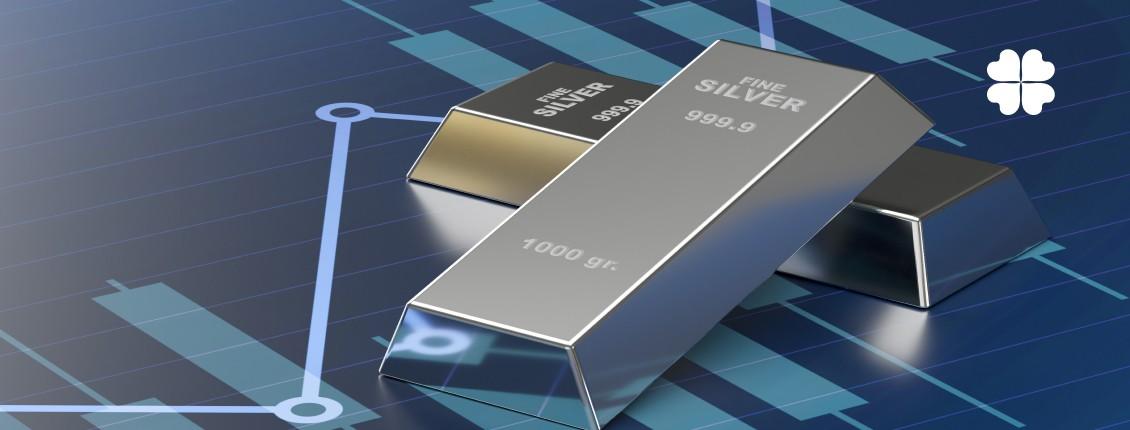
Silver ETF vs Physical Silver

Silver ETF vs Physical Silver: Which is Better for Indian Investors

  • Last Updated: Feb 19,2026 |
  • anil gangwar

An investor in India has two options when it comes to investing in silver: Silver ETFs or the purchase of physical silver in the form of coins or bars. Although both options enable you to enjoy the fluctuations in the price of silver, they are differentiated by the ease with which they are bought, the price at which they are bought, how readily they can be sold, and with what aim. Being aware of Silver ETF vs Physical Silver makes it easier to decide which alternative fits your investment objectives and preferences.

What are Silver ETFs?

Silver ETFs (Exchange Traded Funds) are market-linked instruments that are pegged to the price of silver. They allow investors silver investments without having to buy or store silver itself. When the market is open, silver ETFs can be bought and sold just like regular stocks on stock exchanges like the NSE and BSE.

What is Physical Silver?

Physical silver is silver that is held in physical form, such as silver coins, bars, biscuits, or jewelry. Investors buy physical silver from jewellers, banks, or authorized dealers and hold it as a tangible asset.

Difference between Silver ETFs and Physical Silver

Indian buyers who want to buy silver usually have to choose between Silver ETFs or Physical silver. Both let you bet on the price of silver, but they are not the same in terms of cost, ease of use, liquidity, or how well they spend your money.

Criteria Silver ETFs Physical Silver
Form Silver ETFs are paper/digital investments traded on stock exchanges. It is held in tangible form such as coins, bars, or jewellery.
Storage Does not require storage or security arrangements. Physical silver needs safe storage and may involve locker or insurance costs.
Liquidity Offer high liquidity with real-time buying and selling on NSE and BSE. It may take time to sell and often attract price discounts.
Cost ETFs charge an expense ratio and brokerage charges, but no GST is applicable on ETF purchase. It includes making charges, GST, and storage expenses.
Purity Risk Silver ETFs eliminate purity concerns as they are backed by standardized high-purity silver. Purity depends on the seller.
Price Transparency Prices closely track market rates. Prices may be different because of dealer fees.

Which One is Right for You?

The choice between Silver ETFs and Physical silver will be determined by your investment plans and expectations of your investment in silver.

Choose Silver ETFs if you:

  • Want to invest by opening a Demat account.
  • Favor high liquidity and the ability to buy or sell during market hours.
  • Looking for short to medium-term gains.
  • Desire access to silver without having to store or be secured.
  • Intend to invest in small/frequency amounts

Choose Physical Silver if you:

  • Appreciate the real possession of silver coins or bars.
  • Investment to protect wealth in the long-run.
  • Need a hedge in case of economic or market risk.
  • Prefer a non-counterparty risk investment.

Best of Both Worlds:

A large number of investors choose a moderate course.

  • Use Silver ETFs to have liquidity and to diversify the portfolio.
  • Physically hold silver for long-term security and stability.

Key Takeaway

Silver ETFs and physical silver possess their respective pros and cons. Silver ETFs can be considered more convenient, liquid, transparent, and cost effective to the investor who wants convenience, whereas the traditional physical silver is more appreciated by the investors who prefer to have tangible possession and use over time. 

Frequently Asked Questions (FAQs)

Which is safer: Silver ETF or physical silver?

In different ways, both are safe. Silver ETFs get rid of the risks of storage and purity, while physical silver doesn’t depend on a market platform but needs to be stored safely.

How is investing in a Silver ETF different from buying physical silver?

When you invest in a Silver ETF, you buy units electronically through a Demat and trading account. Physical silver involves purchasing coins, bars or jewellery, which requires storage and may include making charges or purity concerns.

Are Silver ETFs more tax-efficient than Physical Silver in India?

Silver ETFs are generally taxed as non-equity mutual funds in India, where capital gains tax depends on the holding period. Physical silver is taxed as a capital asset, and gains are subject to applicable capital gains tax as per prevailing income tax rules.

Do Silver ETFs track the actual price of Silver?

Yes, Silver ETFs aim to closely track domestic silver prices, subject to minor tracking errors and expense ratios. The performance depends on underlying silver prices and fund management efficiency.

Is liquidity better in Silver ETFs compared to Physical silver?

Silver ETFs are traded on stock exchanges, offering high liquidity during market hours. Physical silver may take time to sell and could involve price negotiations or deductions.

Who should consider buying Physical Silver instead of a Silver ETF?

Investors who prefer tangible assets for gifting, traditional purposes or long-term physical holding may opt for physical silver. It may also suit those who do not have access to a Demat account.

Which option is better for long-term investment: Silver ETF or Physical Silver?

For long-term financial investment and portfolio diversification, Silver ETFs are generally more convenient and cost-efficient. Physical silver may be better suited for personal use or cultural preferences rather than pure investment purposes.

Which is better during Inflation: Silver ETF or Physical Silver?

Silver prices go up during inflation, which is good for both, but Silver ETFs offer easy entry and exit with transparent pricing.
Tags: Silver ETF vs Physical SilverPhysical Silver vs Silver ETF
anil gangwar

anil gangwar

Anil Gangwar is a content marketing professional specializing in SEO-optimized, user-friendly financial content. He focuses on simplifying complex financial concepts and delivering clear, actionable insights that help readers make informed decisions.

Related Posts

How to Build a Diversified Investment Portfolio
Investment

How to Build a Diversified Investment Portfolio?

Feb 13,2026

Disclaimer:This blog is written exclusively for educational purpose. Any stock mentions in the blog are examples and not recommendations. Please refer to our research reports or analyst recommendations for stock ideas.

No Result
View All Result

Open a Free Demat & Trading Account

Please enter valid name
Please enter valid phone

Category

  • Algo Trading (6)
  • ETFs (1)
  • Insurance (8)
  • Investment (2)
  • Income Tax (2)
  • Commodity Trading (18)
  • Saving Schemes (12)
  • Derivatives Trading (86)
  • Currency Trading (4)
  • TradingView (2)
  • Margin Trading (7)
  • National Pension Scheme (2)
  • Stock Market (186)
  • Online Share Trading (104)
  • Demat Account (38)
  • Mutual Funds (78)
  • IPO (28)
  • Indian Market & Economy (9)
  • Tax (15)

Latest Blogs

Silver ETF vs Physical Silver
Silver ETF vs Physical Silver: Which is Better for Indian Investors?
Motor Insurance in India
Motor Insurance in India: Comprehensive vs Third-Party Cover Explained
Individual vs Family Floater Health Insurance
Individual vs Family Floater Health Insurance: Which One Should You Choose?
Common Myths About Life Insurance That Indian Buyers Should Know
Union Budget 2026: What Investors & Traders Should Know
How to Build a Diversified Investment Portfolio
How to Build a Diversified Investment Portfolio?
Mistakes to Avoid While Buying Health Insurance in India
Top Mistakes to Avoid While Buying Health Insurance in India
ulip vs term insurance
ULIP vs Term Insurance: Understanding Features, Returns and Risks
What is Life Insurance
What is Life Insurance and Why is it Important for Indian Families?
Common Claims Rejection Reasons
Common Claims Rejection Reasons in General Insurance and How to Avoid Them
Learn More About Investment


Markets

  • Upcoming IPO
  • Buyback Shares
  • Listed IPO
  • IPO Subscription Status

Products

  • Overview
  • Equity
  • Derivatives
  • Commodities
  • Currency
  • Margin Trading Facility
  • IPO
  • SME IPO
  • Mainboard IPO

Services

  • NPS
  • Open Demat Account
  • Open Trading Account
  • Open NRI Account

Research

  • Investment Ideas
  • Trading Calls
  • Research Reports
  • Blog
  • Glossary
  • Knowledge Centre
  • Stock Market Holidays
  • NSE Holidays
  • BSE Holidays

Support

  • FAQ
  • Contact Us
  • Locate Us
  • Downloads
  • Calculators
  • Margin Calculator
  • Margin Matrix
  • Demat Account FAQs
  • Trading Account FAQs
  • Freezing / Unfreezing of Online trading Access
  • About Us
  • Notification
  • Disclaimer
  • Privacy Policy
  • Terms Conditions
  • Rules Regulations
  • Corporate Information
  • Educational Note For Clients On PMLA
  • Partner with Us
Important Links
  • NSE
  • BSE
  • SEBI
  • MCX
  • NCDEX
  • MSEI
  • NSEL
  • IRRA
Investor Complaints
  • NSE
  • BSE
  • MCX
  • SEBI
  • SEBI SCORES
  • NCDEX
  • MSEI
  • SMARTODR
E-Voting Facility
  • NSDL
  • CDSL
Upcoming IPO
  • Kumar Arch Tech IPO
  • Kalpataru Ltd IPO
  • Onset Ltd IPO
  • Manjushree Technopack IPO
  • instagram
  • instagram
  • instagram
  • instagram
  • instagram
  • instagram
  • instagram

Unified Portal Version No.1.0.0.2

Copyright 2010 Religare. Trademarks are the property of their respective owners. All rights reserved. Religare Broking Limited (CIN: U65999DL2016PLC314319), Registered Office: 802 -815B, 8th Floor, Gopal Das Bhawan, 28-Barakhamba Road, Connaught Place, New Delhi - 110001.
Telephone No.: +91-011-49871213 | Fax: +91-011-49871189
E-mail: wecare@religareonline.com

Member Religare Broking Limited (RBL) : SEBI Regn. No. INZ000330135 NSE CM, F&O, CD TM Code: 06537 Clearing Member (F&O) No. M50235; BSE CM, F&O, CD, CO Code: 3004 Clearing No: 3004; MSEI CM, F&O, CD, TM Code: 1051 | MCX Membership No. 56560 | NCDEX Membership No. 01276 | AMFI-registered Mutual Fund Distributor ARN No.139809.

Member Religare Commodities Limited (RCL) : Regn No. MCX 10575 | NCDEX 00109|NeML 10042|NSEL 10180 |SEBI Registration No. MCX/NCDEX :INZ000022334.

Depository Participant : Religare Broking Limited (RBL) - NSDL: DP ID: IN 301774 | SEBI Regn. No: IN-DP-385-2018 | CDSL DP ID: 30200 | SEBI Regn. No: IN-DP-385-2018

Religare Broking Limited(RBL) : Research Analyst SEBI Regi. No : INH100006977 | BSE Ltd. (RAASB) Enlistment No. 5334

Religare Broking Limited(RBL) : Registrars to an issue and share Transfer Agents (RTA) - SEBI Regi. No : INR000004361

Religare Broking Limited(RBL) : Corporate Agent (Composite) - IRDA Regi. No : CA0581

Religare Broking Limited(RBL) : National Pension System - Point of Presence (NPS-POP) - PFRDA Regi. No : POP01092018

Advisory for Investors

  • Investor Charter Stock Broker
  • Investor Charter Research Analyst
  • Investor Charter of Depository Participant
  • Advisory KYC Compliance
  • Investor Charter of Registrars to an issue and share Transfer Agents (RTA)
  • How to process fund transfer via UPI
  • For Reporting of Cyber attack/incident Click here..!!
  • Details of Client Bank Accounts of Religare Broking Limited
  • How to Link Your Aadhaar Number with Demat Account
  • How to link Aadhaar Card with your PAN Card
  • How to Open a Demat & Trading Account Online
  • Member Details
  • SOP - Centralized mechanism for reporting the demise of an investor through KRAs
  • SEBI Investor Website
  • SOP for Incapacitated investor
  • SEBI Circular - Opening of Demat Account in the name of Association of Persons
SEBI-Investor-Certification-Examination.

ATTENTION INVESTOR

-- Stock Brokers can accept securities as margin from clients only by way of pledge in the depository system w.e.f. September 1, 2020.

-- Update your mobile number & email Id with your stock broker/depository participant and receive OTP directly from depository on your email id and/or mobile number to create pledge.

-- 20% upfront margin of the transaction value to trade in cash market segment.

-- Investors may please refer to the Exchange's Frequently Asked Questions (FAQs) issued vide circular reference NSE/INSP/45191 dated July 31, 2020 and NSE/INSP/45534 dated August 31, 2020 and other guidelines issued from time to time in this regard.

-- Check your Securities /MF/ Bonds in the consolidated account statement issued by NSDL/CDSL every month.

-- Prevent unauthorized transactions in your account - Update your mobile numbers/email IDs with your stock brokers. Receive information of your transactions directly from Exchange on your mobile/email at the end of the day - Issued in the interest of Investors.

-- Prevent Unauthorized Transactions in your demat account Update your Mobile Number with your Depository Participant. Receive alerts on your Registered Mobile for all debit and other important transactions in your demat account directly from Depository (NSDL/CDSL) on the same day issued in the interest of investors.

--If you have any grievance you may reach Religare Broking Limited at igreligare@religare.com & Religare Commodities Limited at ig.commodities@religare.com.
If the complaint does not get redressed within 21 days, the complainant may use SCORES to submit the grievance.

--Filing complaint on SEBI SCORES – Easy & quick
a. Register on SCORES portal.
b. Mandatory details for filing complaints on SCORES - Name, PAN, Address, Mobile Number, E-mail ID.
c. Benefits - Effective Communication & speedy redressal of the grievances

-- No need to issue cheques by investors while subscribing to IPO. Just write the bank account number and sign in the application form to authorise your bank to make payment in case of allotment. No worries for refund as the money remains in investors account.

-- KYC is one time exercise while dealing in securities markets - once KYC is done through a SEBI registered intermediary (broker, DP, Mutual Fund etc.), you need not undergo the same process again when you approach another intermediary.

-- Trading and Demat Accounts opened under Insta Plan will not be eligible for dealing through branches.

-- Please note that by submitting your mobile and email on our website, you are authorizing us to Call/SMS/Whtsapp/RCS/Email you even though you may be registered under DNC. We shall Call/SMS you for a period of 12 months.

Religare Broking Limited do not have any arrangement either with Times Internet or with Refinitiv for Research Portfolio Report sharing

Saarthi-Flyer

No Result
View All Result
  • Products
  • Research
  • Career
  • Partner with us

© 2021 RELIGARE -Designed By Religare.

Open Demat Account
Please enter valid name
Please enter valid phone

Open a FREE Demat
& Trading Account

Invest in Stocks, IPOs, F&O &
Mutual Funds

Please enter valid name
Please enter valid phone
religare logo

Get better recommendations, Make better investments.

Daily Stock Suggestions from Leading Experts!

By signing up, you agree to receive updates on SMS, Email & WhatsApp

Open Demat Account
Open a Free Demat Account

Please enter valid name
Please enter valid phone