Is it compulsory for the investors to use the new handle only?
The investors can choose their preferred mode of payment, such as UPI, IMPS, NEFT, RTGS, or Cheques. If an investor opts to use UPI for the payment to registered intermediaries, then they have to do so only using the new UPI IDs allotted to registered intermediaries.
What should I check while making payment using the new UPI IDs/ QR Code?
Investors need to keep following things into consideration:
1. The UPI ID should properly show the name of the intermediary, followed by the short abbreviation of their category for example “brk” for Brokers, “mf” for Mutual Funds to the left of the “@” character.
2. On the right side of the “@”, the new and exclusive handle “@valid” should be present, followed by the bank name.
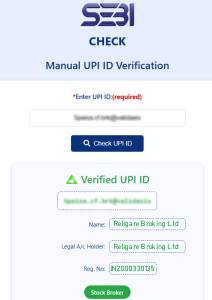
3. On the confirmation screen, the app should show a white thumbs-up icon inside a green triangle.
4. The QR code generated using the utility will have a white thumbs-up icon inside a green triangle. It will also display the UPI ID just below the QR code.
Do investors also need to obtain new UPI handles to transact in the securities market?
No, the new UPI IDs are only for intermediaries to obtain and investors can continue to use their existing UPI IDs.
Whom to approach if my transaction/ payment fails with the new UPI ID?
The secure validated UPI ID of intermediaries will use the same banking channel as the earlier generic UPI handles. In case of any technical difficulty, investors are requested to approach their respective bank.
Where will I get to see the new Valid UPI ID?
During the payment process, when you’re redirected to or switch to your chosen UPI app to approve the transaction, you’ll be able to see the new Valid UPI handle (@valid) on the payment screen which you can cross-verify before completing the payment.
How to cross-check the valid UPI handle?
Investors can verify the valid UPI handle by visiting SEBI’s official portal Enter the required details to confirm the authenticity of the UPI handle as shown below: